
Blog
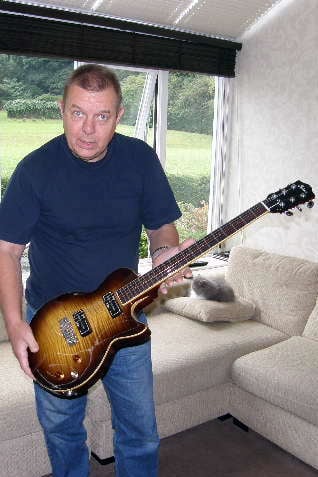
Cairnes guitar
Jim Cairnes last guitar finished in the Bailey workshop
-

- David looks pleased with the result
-
- Guitar made by Jim Cairnes
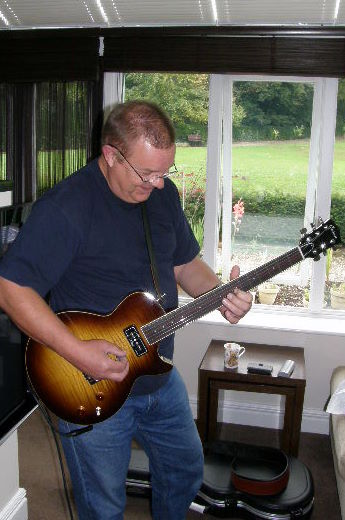
-

- David Skuse is the new owner

-
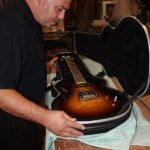
- Marvin inspects the guitar
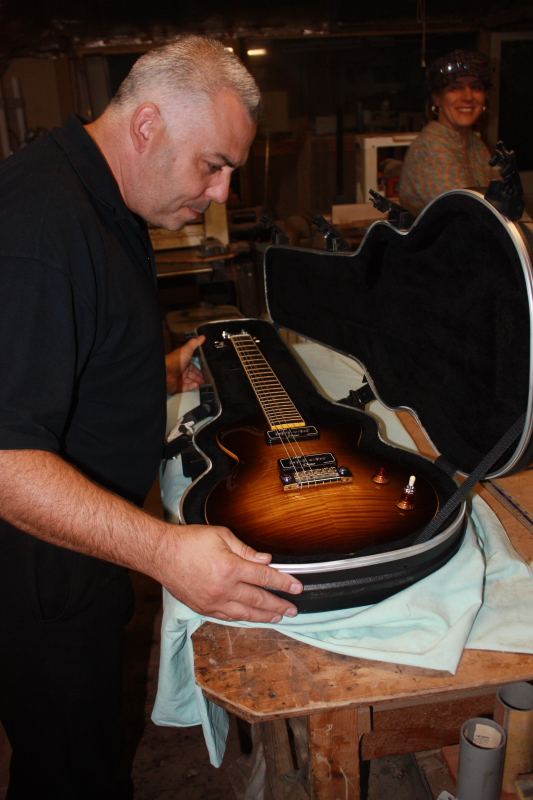
Jim Cairnes passing was a sad loss to the world of guitar making but he leaves behind a legacy of work that will outlast us all. I was asked recently to finish this guitar which he was working on when he became ill.
We sprayed the guitar here and set it up. It went together with no problems at all which shows he did a very good and thorough job and while I as working on it I had the feeling he was looking over my shoulder making sure I did it right. Who knows? I made sure I did my best just in case.
Marvin Cairnes his son came on Thursday to collect the guitar and take it to its new owner. He arrived about two hours early so I hadn’t had time to plug it in and when we did it didn’t work! A quick check turned up the problem- Jim had used a stereo jack socket for the output: Even though the guitar is mono a stereo jack socket can be used- it grips the jack more securely- but it also gave me a 50/50 chance of connecting the output to the wrong tang…(note to self: wear your glasses!)…I quickly moved the offending wire and breathed a sigh of relief. Someone up there was probably laughing…
The guitar played fine just how Jim had left it. I just had to polish the frets, set the truss rod and the action. It sounded great when plugged in which is a testament to his skill as a guitar maker as he also made his own pick ups.
While Marvin was here we talked about him coming on our course to finish the very last ‘Colt’ guitar which Jim had left kicking around in his workshop, and he’d brought it along so I could get a look at it. All the parts are there including a brass trigger and other metal parts- It really is a work of art and would be great to see completed. I have never seen anything like it. Marvin told me his dad made several, one is in the American Guitar Museum, but the locations are unknown for the rest so it would be great to see one restored to the family.
Build your own acoustic – Adam Savage
Bailey build your own acoustic course
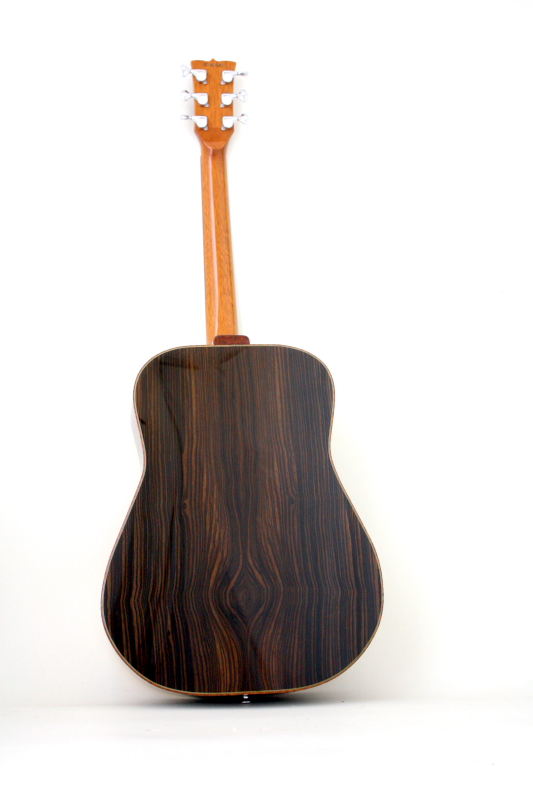
Macasser Ebony Dreadnought style Guitar- by Adam Savage
-
- I made this!

-

- The neck joint

-
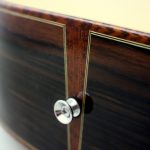
- Snakewood binding and tail piece end graft

-

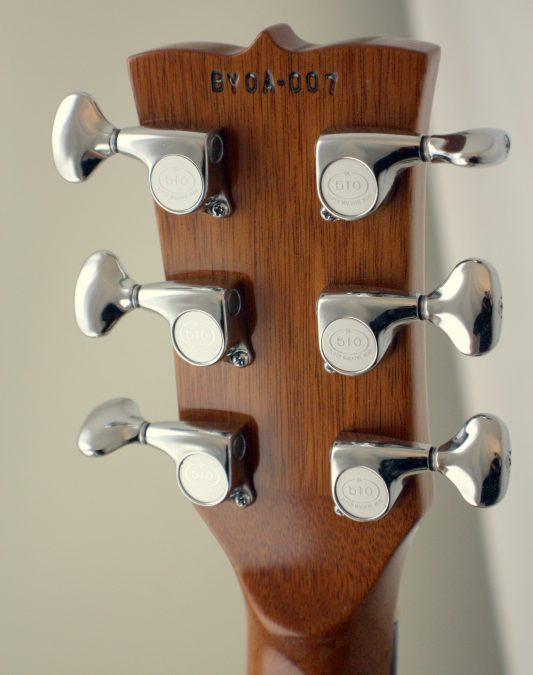
- The neck is mahogany
-
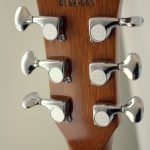
- Serial No: BYOA-007

-
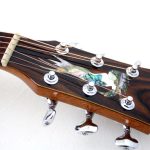
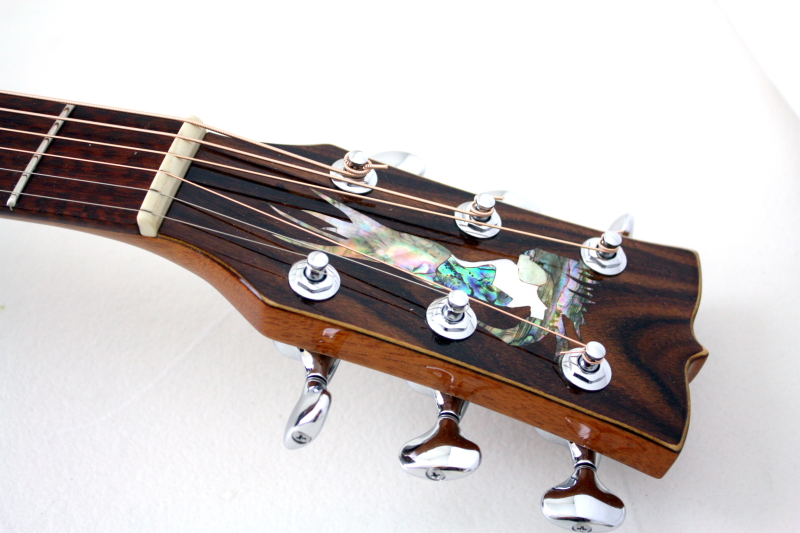
- Custom inlays
-
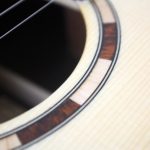
- Close up of the rosette

-

- You can customise your design
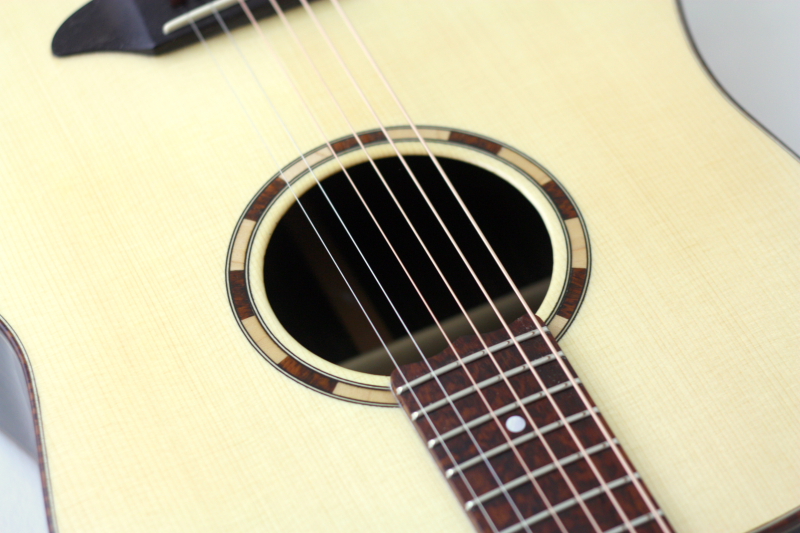
-
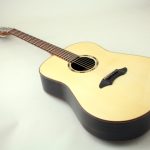
- You can make anything you like

-

- Adam’s custom self made acoustic

The name’s Savage…Adam Savage…007.
Adam made this guitar some time ago on our build your own acoustic course but unfortunately he had a problem with the back – it split. This is usually caused by the wood drying out too much. I have written an article about splits and cracks and how to avoid them which is a must read – If you have an expensive handmade guitar you really need to know how to look after it!
It took three visits to fix it. First he came back to make a new back. The next time he took the old back off and glued the new one on, then he came back recently to put it back together again. While we were at it he decided to upgrade the finish to a full gloss which really brought out the colour of the wood and will help to protect it much better in future.

Crack or split repair and prevention
….OUCH…A guitar makers nightmare…
-

- Humidipak

-
- Planet Waves Humidity Control Kit
-
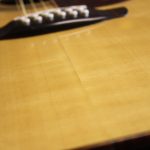
- Sound board centre seam crack

The Problem:
It is very sad when after all your hard work something like this happens…it shouldn’t but it does. It is surely equally upsetting for the owner. This is only the second time one of my guitars has come back looking like this but I thought I would write a few words on the subject to hopefully help prevent it happening again.
It is not uncommon among high end guitars made as they are from inherently fragile, thin plates of fine tone woods. It appears the most common place for a split to appear is along the centre seam of the soundboard between the bridge and the tail block as in the picture above. Coincidentally this can also the hardest to fix as there are more braces on the soundboard to be potentially affected.
Unless the braces have also come loose, or the top or back become separated from the sides, most splits or cracks have no noticeable effect on the tone, but it is better to repair them before they get any worse.
The Cause
All our wood is carefully conditioned before work starts but this does not make it indestructible.
Rapid changes or extremes in the environment can harm your guitar. Because the top and back are curved this allows some breathing space for the thin plates to expand and contract slightly as they take on and lose moisture, but there is a limit. Taking on moisture in a damp environment is less damaging, the plates may warp and the action may rise, but too dry and the wood will shrink and eventually split. It can also become very brittle and even a small knock can cause it to split.
Real damage occurs invariably when guitar is allowed to dry out too much. The most common causes are:
A. left in the sun
B. hot car/van
C. attic or centrally heated room (i.e.too near a radiator)
The symptoms
You can usually spot if your guitar is drying out to much as the curved top and/or back plate will start to flatten out. This will cause the action to drop and you may experience a few buzzes or rattles while playing that weren’t there before. Other symptoms may include a dry appearance but this can be hard to spot to the untrained eye, and sharp fret ends as the fretboard shrinks and they begin to stick out slightly.
Inevitably as they are made of wood, guitars move all the time, albeit very slowly, as they react to the changes in the seasons which is why some players have their guitars set up twice a year (whether it needs it or not!). Under normal conditions most guitars don’t move enough to affect playability so the small amount of movement goes unnoticed.
The Cure
The instrument should be moved immediately to a safe environment between 45-55% humidity and allowed to settle down and stabilise. Often gaps will close up on their own but they will still need to be fixed to stop it from spreading.
Various repair techniques can be employed to cure the problem, some refinishing is normally required.
A. If the gap can be easily closed then it can be simply glued back together
B. Wider gaps must be filled with a splint made from the same material
Small cleats may be glued inside to reinforce the repair- the sound should remain unchanged if done correctly.
C. In extreme cases it may be easier to replace the damaged part altogether but this has the most potential to alter the sound of your cherished instrument especially if it is the soundboard.
Repairs like this can be tricky and very expensive so it is well worth trying to avoid them.
Prevention is much better!
Wood should not crack or split if kept at 45%-55% humidity.
Guitars are made to be played and not kept in a glass case, but if you have an expensive or cherished guitar it is well worth taking a few steps to avoid any damage caused by letting it dry out too much.
Buy a ‘hygrometer‘ (not a typo- a humidity meter), and a ‘case humidifier‘ if the room you keep the guitar is on the low side (less than 40%) and put the guitar in it’s case when you are not using it.
The Planet Waves Humidity Control Kit contains both items.
Alternatively for non techies the Planet Waves Humidipak is a two way system that gives out or takes in moisture as needed to keep your instrument in the best of health.
In future every Bailey acoustic guitar will be supplied with a Humidipak which I will also make available in my on line shop for anyone interested in protecting their own instruments.[email_link]

Bailey custom acoustic from 40,000 year old Ancient Kauri
A guitar made with the oldest workable wood in the world!
Read Part 1, Part 2, Part 3, Part 4, Part 5
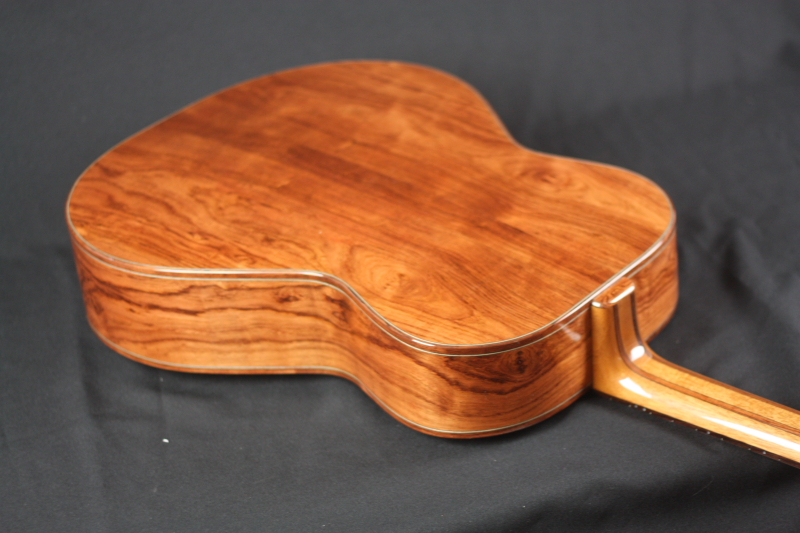


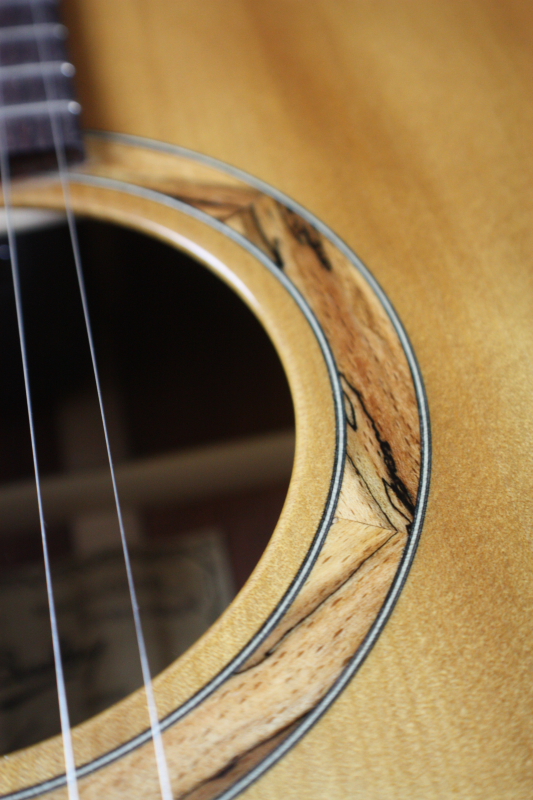


The Ancient Kauri Bailey Bootlegger Custom guitar is now finished and has already flown the nest. Sandy came to our ‘Guitar Sunday’ at The Firehouse to collect it. I used it to check the sound for the PA and ended up going through my entire repertoire of solo guitar pieces. I really didn’t want to stop playing it which is always a good sign.
I was surprised straight away after first stringing it up how even and well balanced it sounded, not to mention full and loud, but without being brash. A lovely rich warm mellow tone with each string as clear and well defined as the others. If there were guitars 40,000 years ago is this what they might have sounded like?
When I first plugged it into the tuner I was amazed how low the bass E string could be tuned and still sound great- most guitars lose it around low C or B but this one remained constant- it would be a wonderful guitar for altered tunings.
I have thoroughly enjoyed making this guitar. By a miracle of preservation in a peat bog this piece of wood has existed for many times longer than the whole of recorded human history. Touching, smelling, seeing and hearing (tasted pretty good too!) the Ancient Kauri during the build gave me a strange but direct link to a long forgotten past. I felt a little bit like I was waking it up from a very long sleep…kind of humbling to know how it lay silent for so long and now it sings…
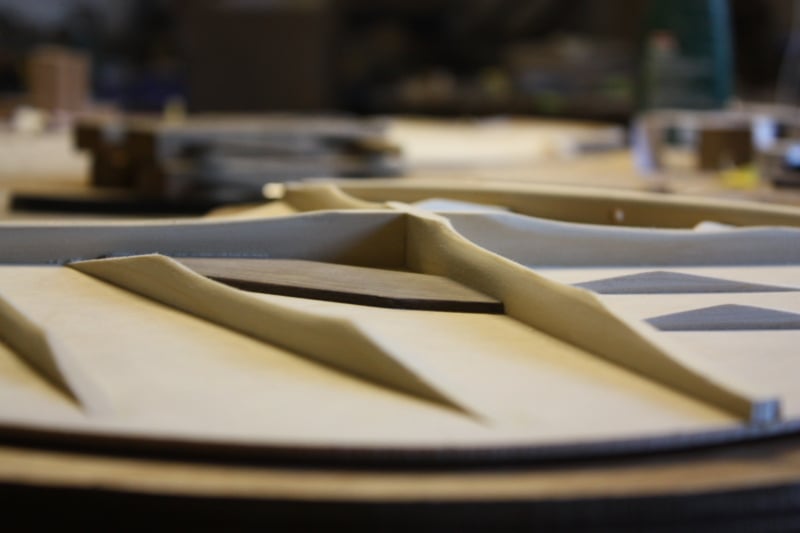
Bailey custom acoustic guitar- Ziricote and Bearclaw Bootlegger-P5
Assembling the body
Read part 1, part 2, part 3, part 4, part 5, part 6
-

- Scalloped bracing

-

- A closer look at the bracing
-
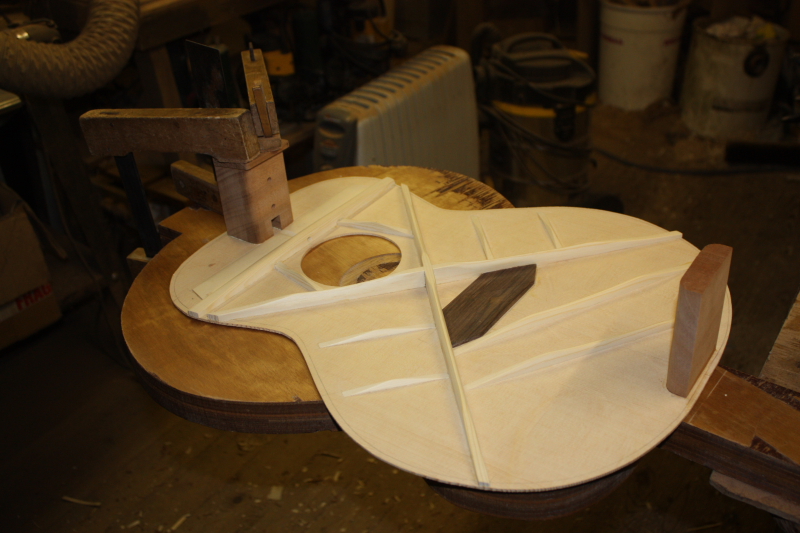
- The heel block is glued to the soundboard
-
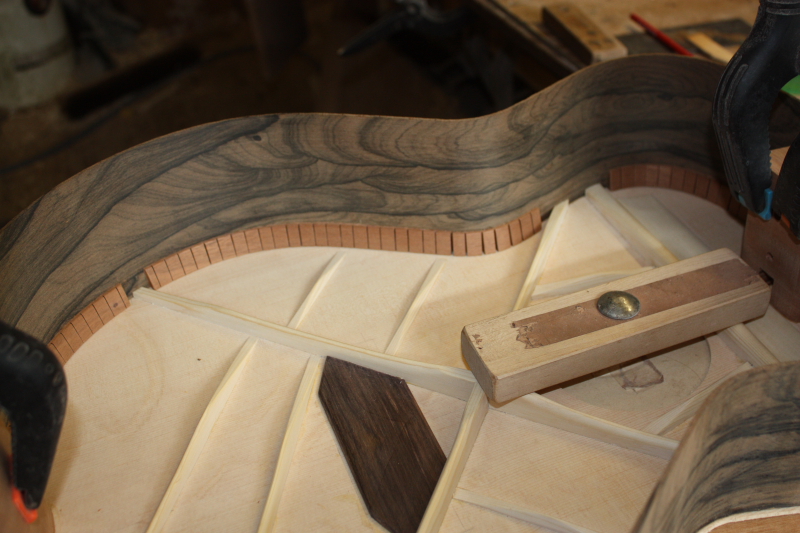
- Fitting the sides
-
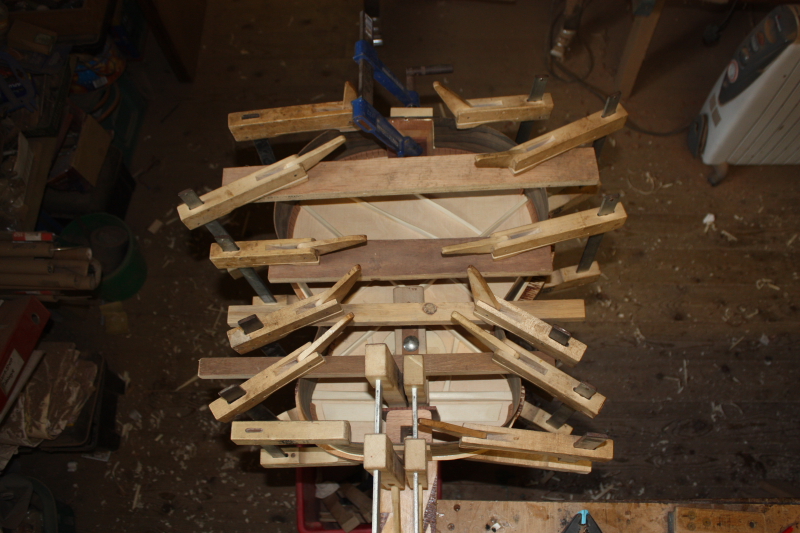
- Gluing the sides on
-
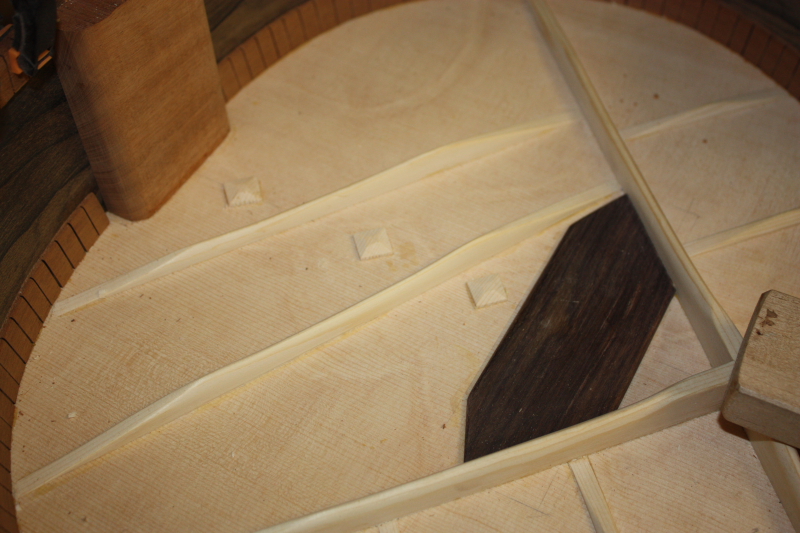
- Centre seam reinforcement diamonds
-

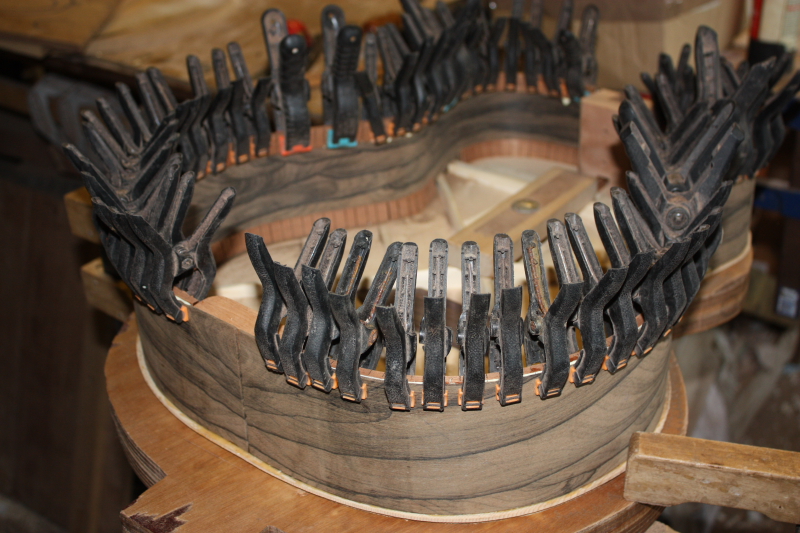
- Gluing the final kerfed lining strips
-
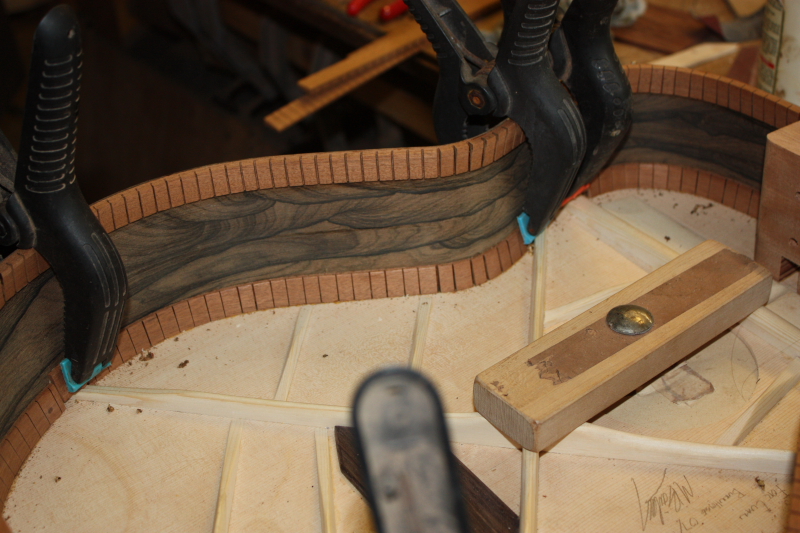
- Gluing the brace end reinforcement
-
- Brace end reinforcement
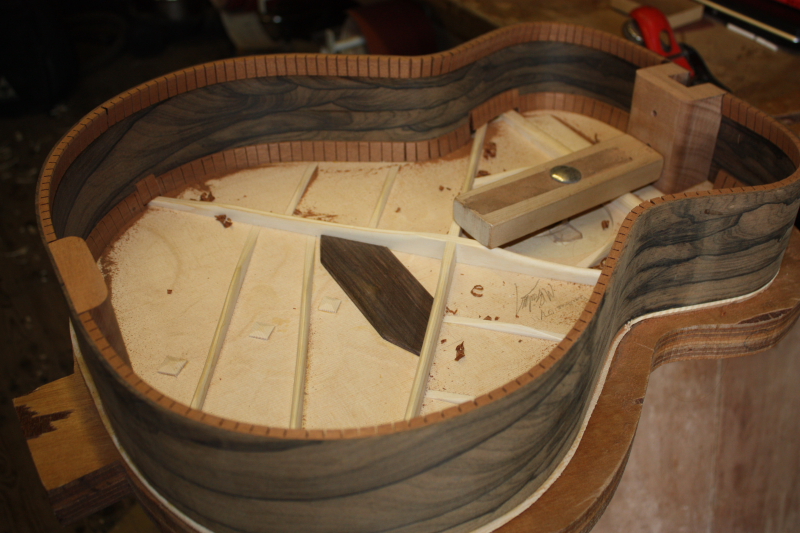
-
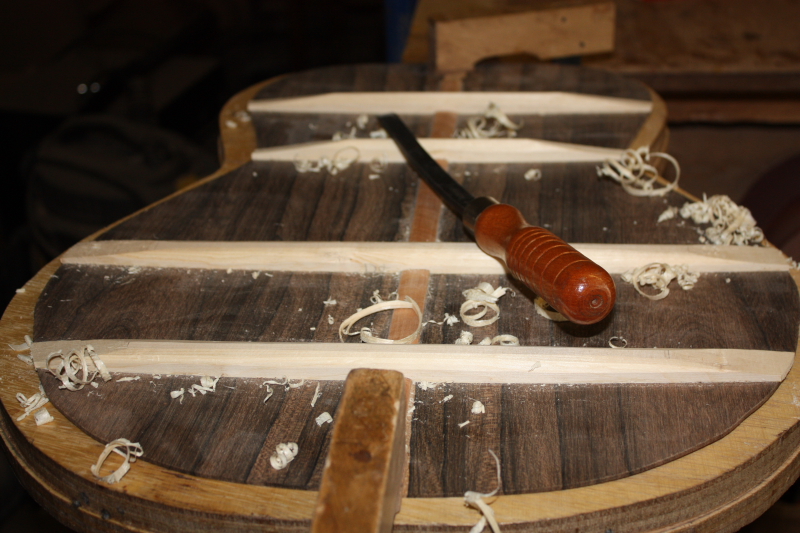
- Carving the back braces
-
- Notches for the back braces
-
- Ready to fit the back
-
- Ready for the back
-
- The back is ‘roped’
-
- The body is now complete
-
- The body is ready for binding
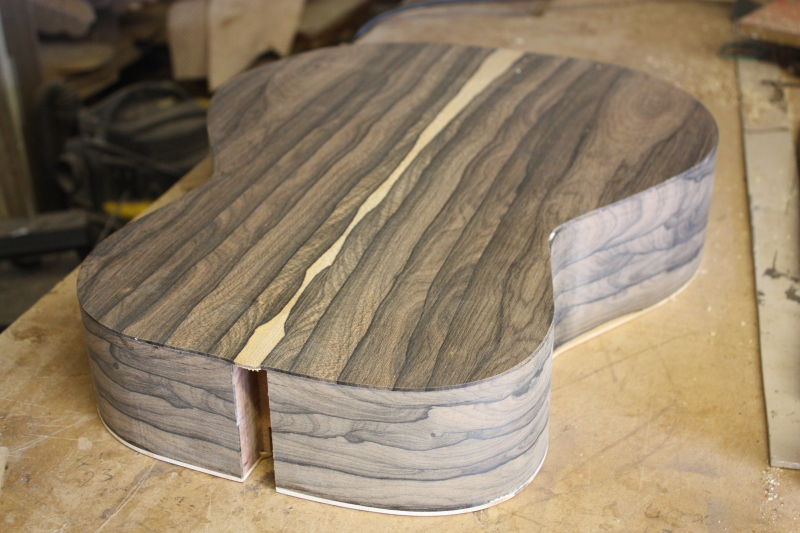
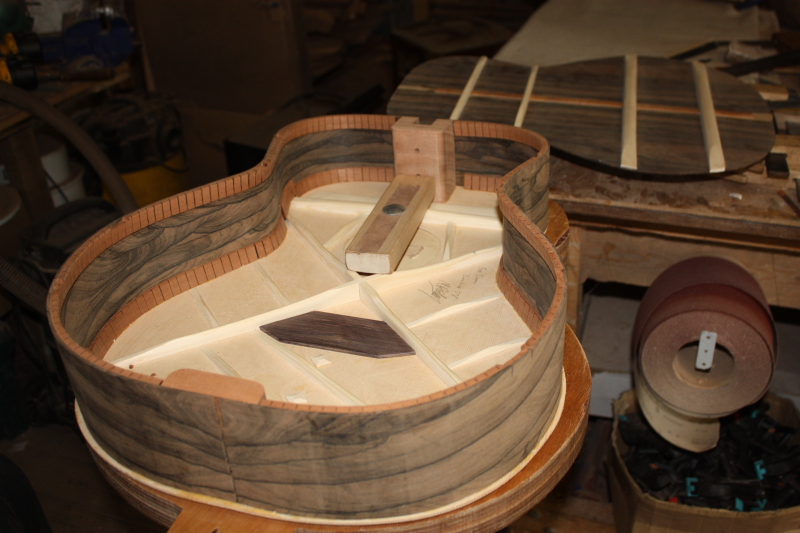
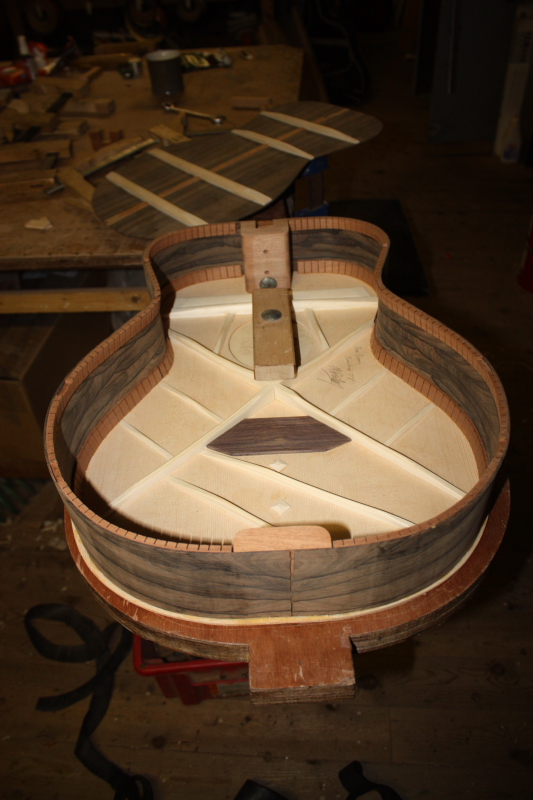
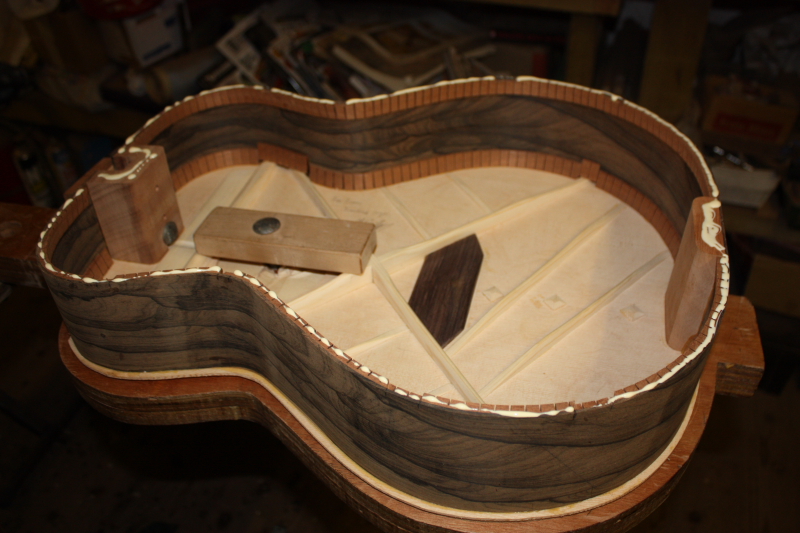
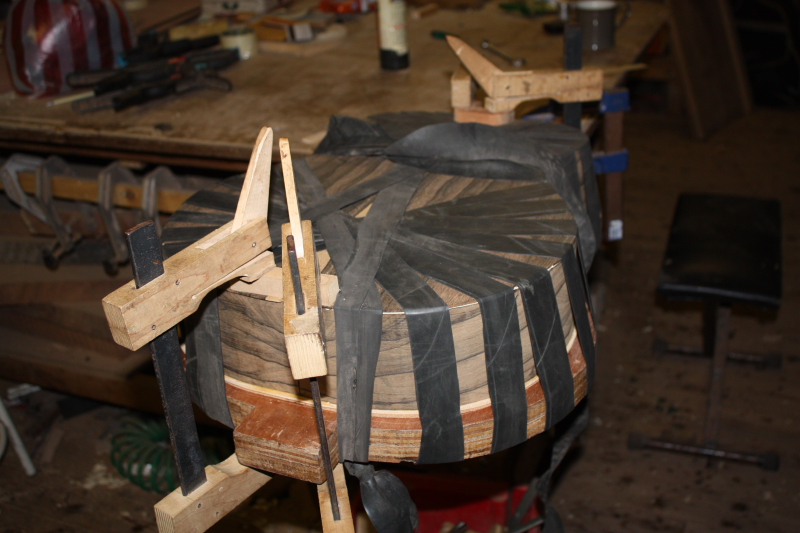
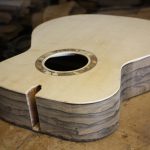
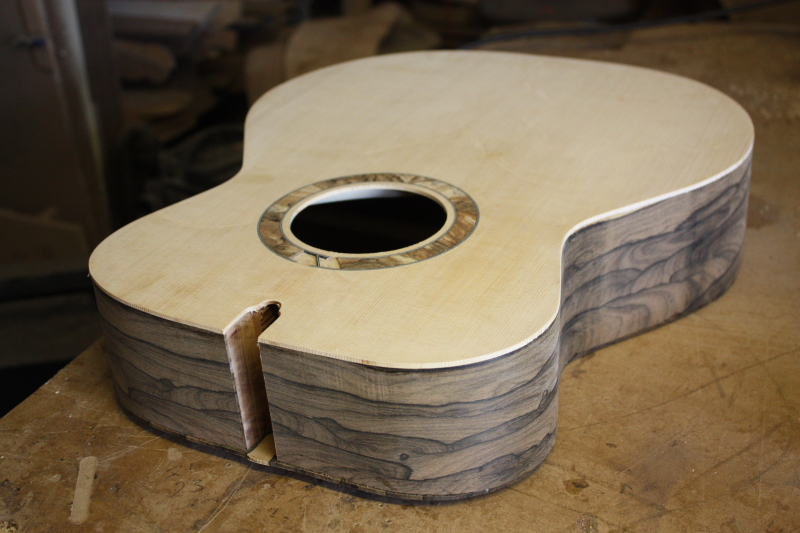
The courses are finished for a few weeks so It is time to carry on with this custom Bootlegger I am making for Euan. Before the last course I managed to get all the parts for the body made, so to complete it all I had to do was finish carving the braces and then glue it all together. Now the ‘box’ is complete it needs binding and then I can continue working on the neck. I am still waiting to hear whether Euan has decided to go for a gloss finish or not…but there is still plenty of time for him to make up his mind…It will be a couple of weeks before I get as far as thinking about applying the finish…

Build your own custom guitar- Dave Fletcher- spray job
Caramel burst- colour test
-
- The cap before colouring
-
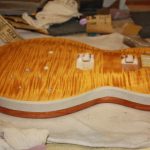
- First the amber is applied

-
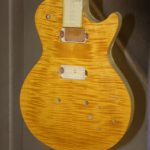
- Ready for the burst
-
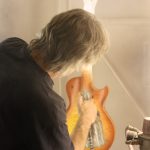
- Spraying the burst
-
- A perfect match?
-
- It’s a custom colour

-
- Inside under flourescent light
-

- outside close up
-

- Outside full body shot
-
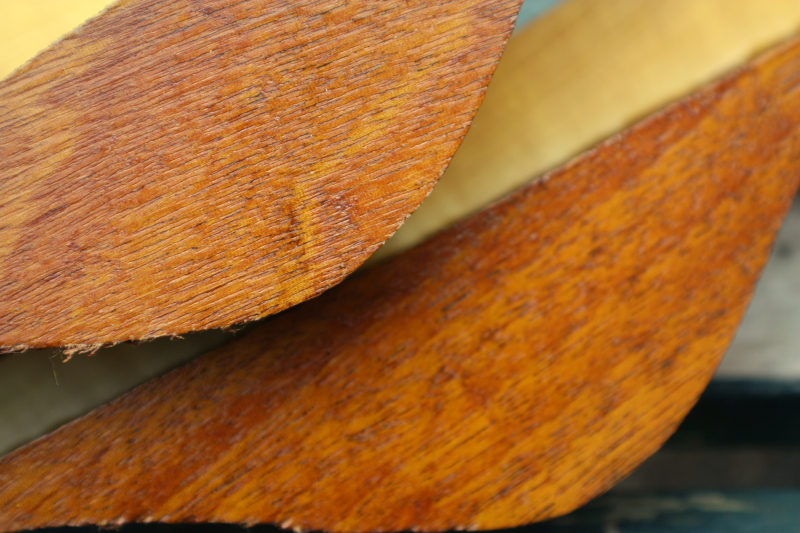
- Mahogany test piece
-
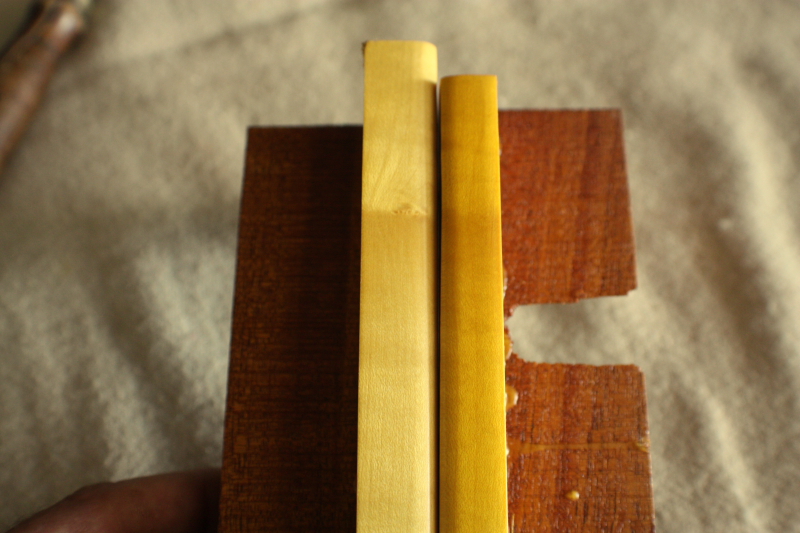
- Antique fake binding test piece
-
- With a natural piece for comparison
-
- inside colour test A
-
- Inside colour test B

-

- Outside colour test A
-
- Outside colour test B
-

- Outside colour test C
-
- Colout tests for the back
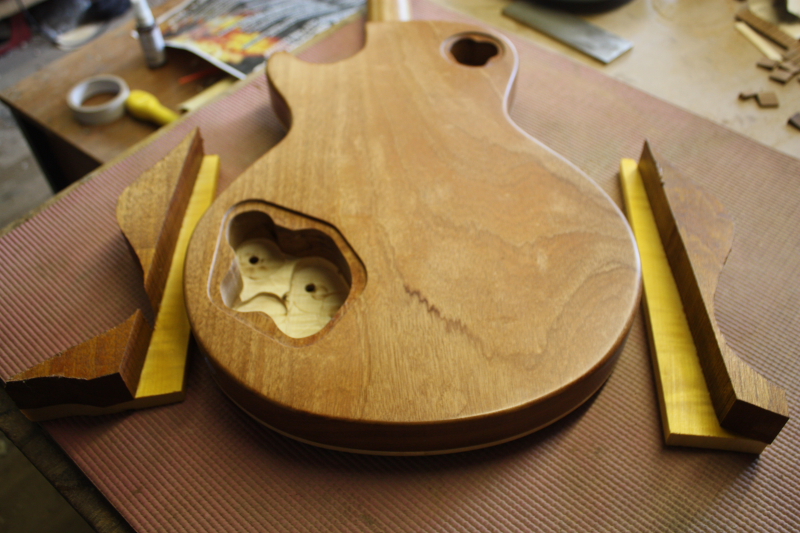
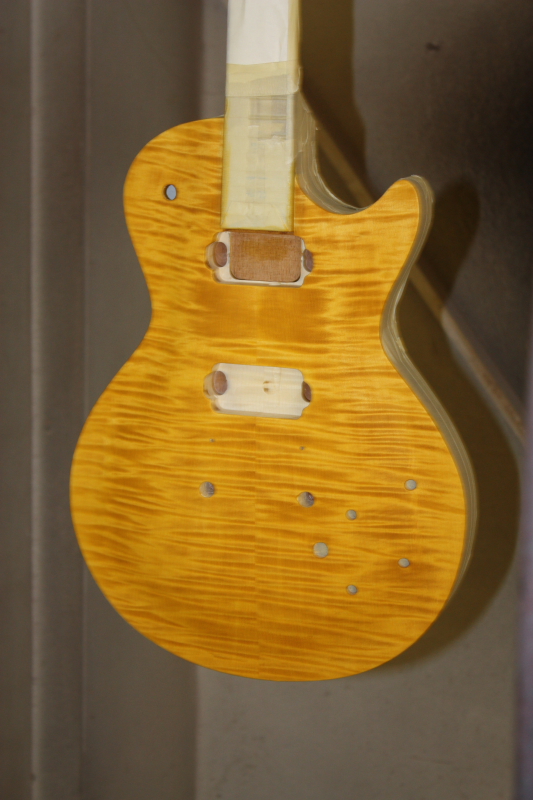
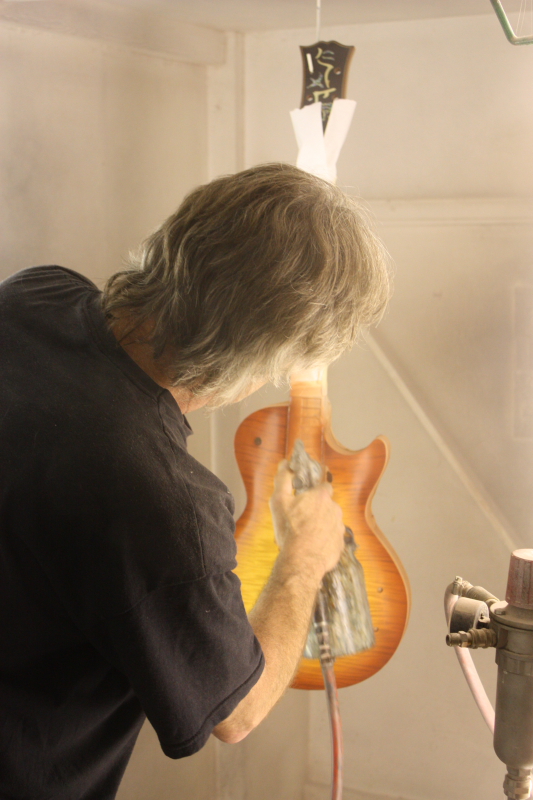
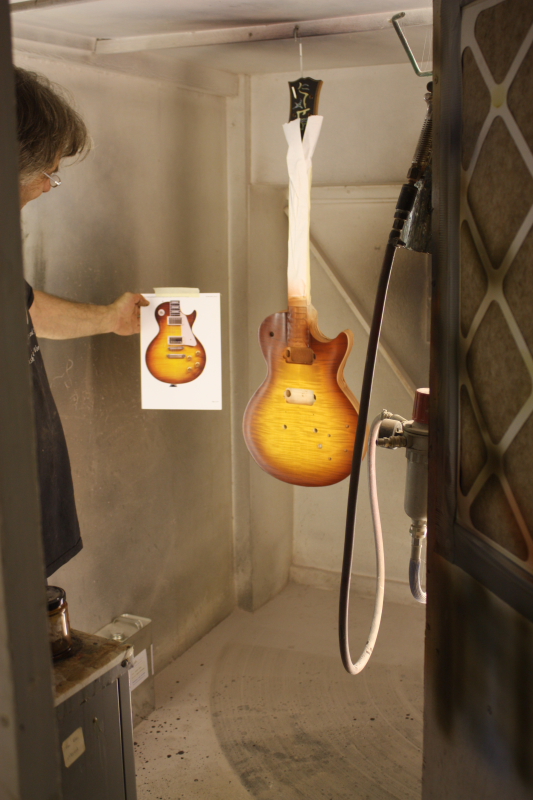
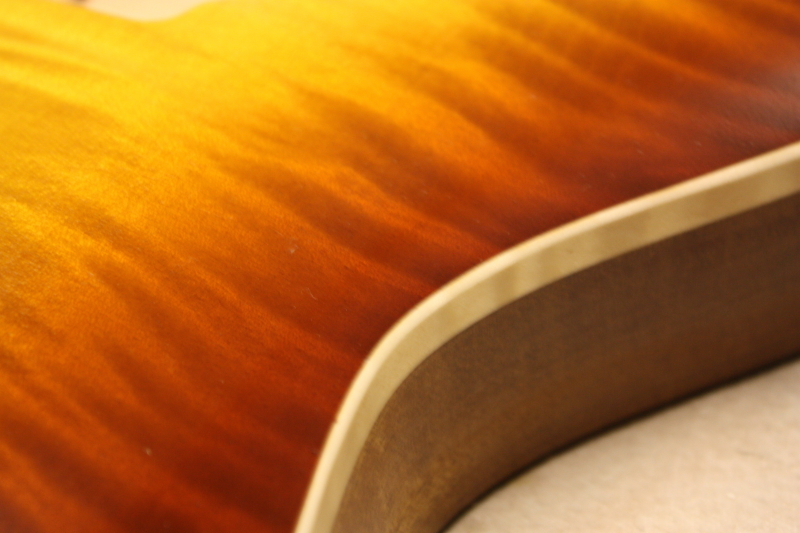
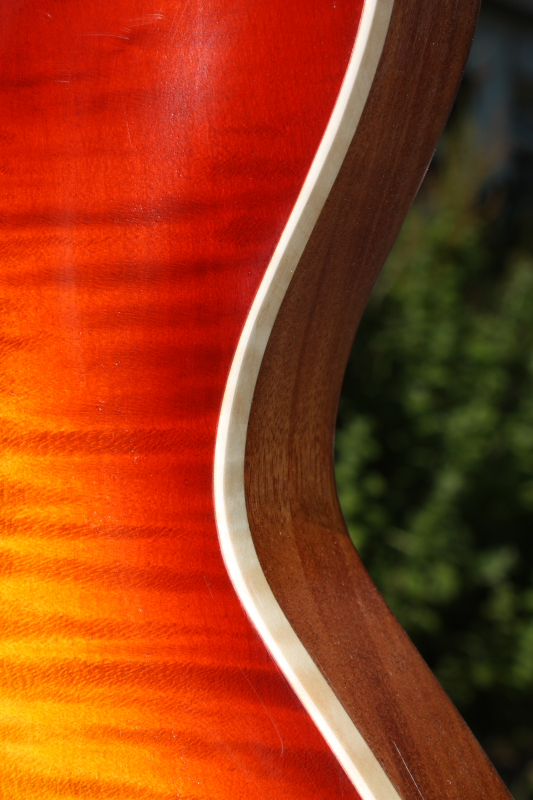
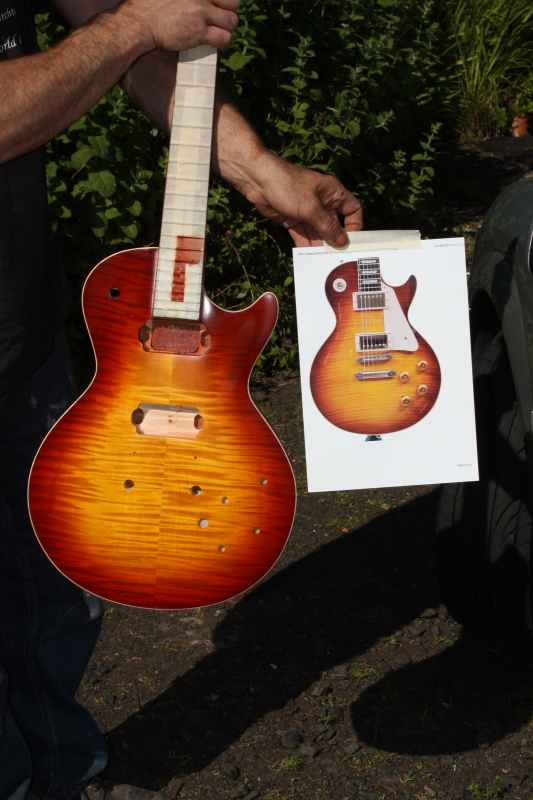
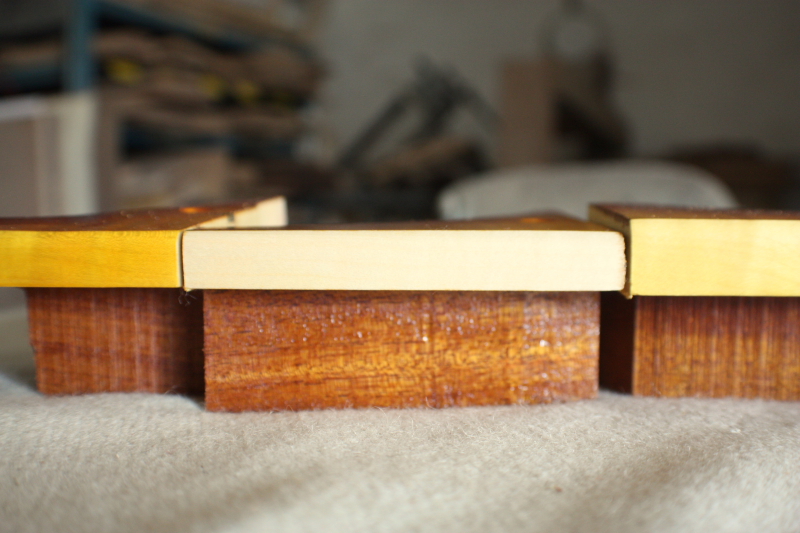
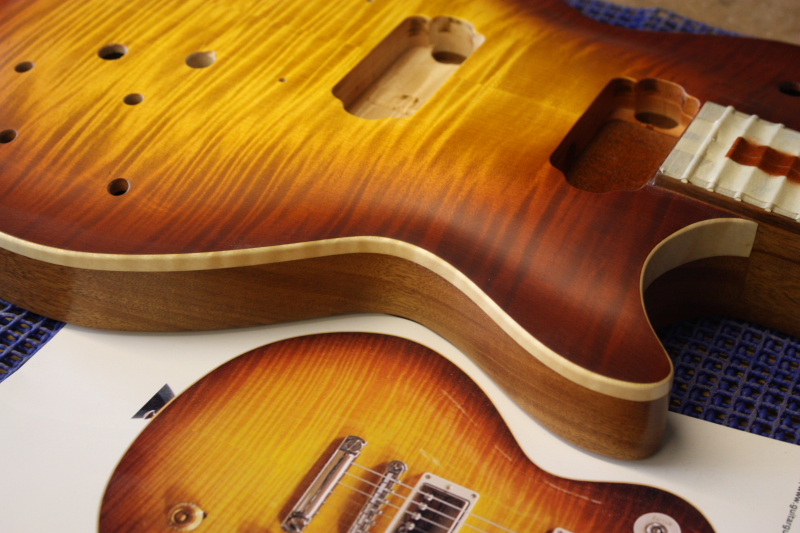
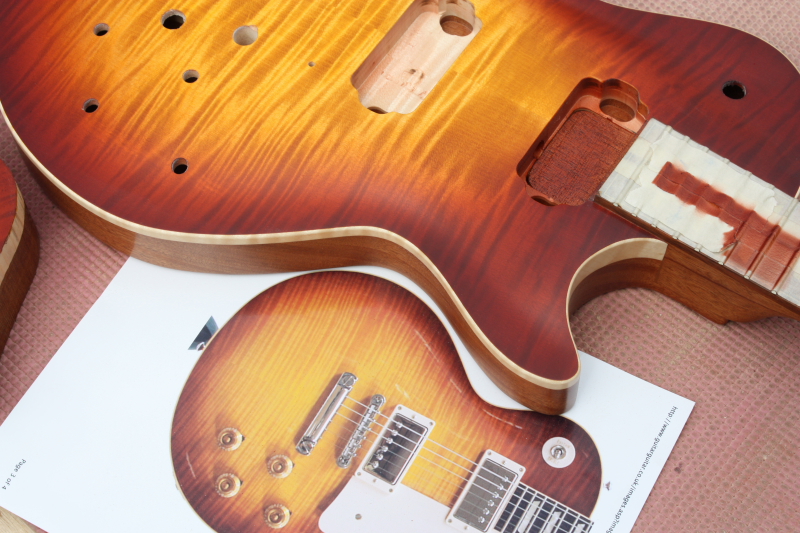
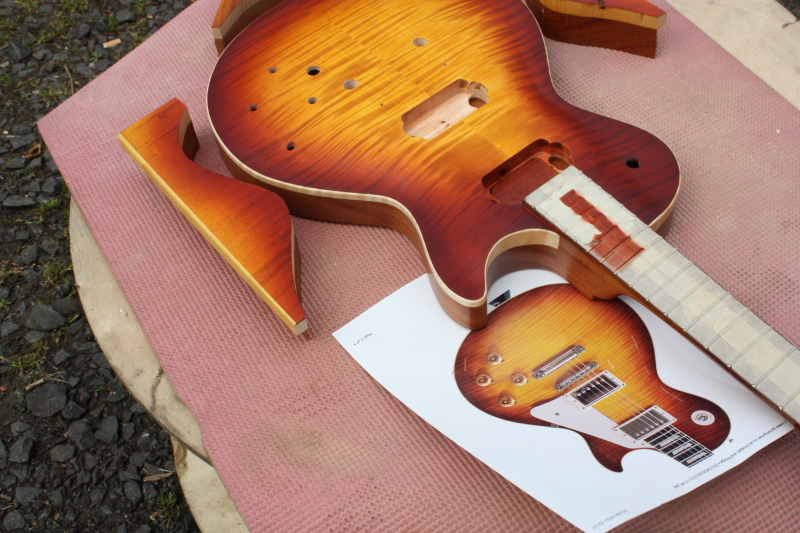
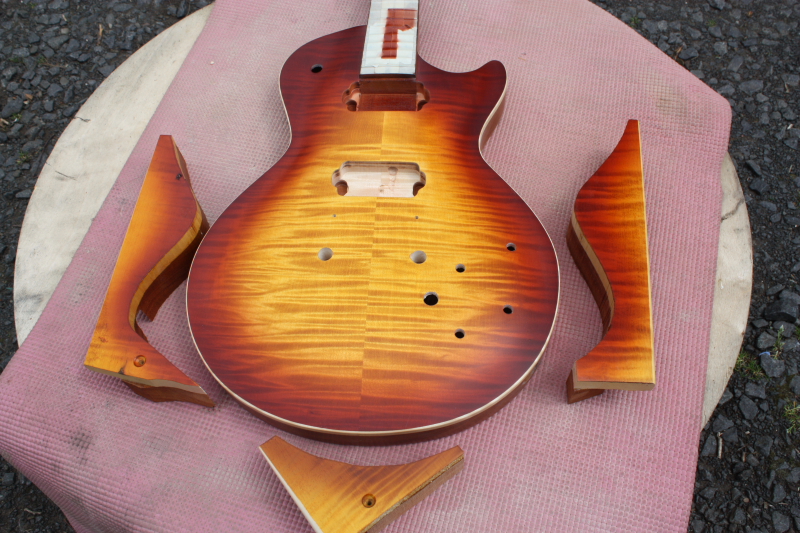
Dave made this guitar recently on the build your own custom guitar course. He wanted a gloss finish which means leaving it with us to spray. He left a picture which we used for colour comparison and I think Billy did a great job matching it. The rest of the guitar will be tinted with just a drop of amber to give it a slightly aged look- I will post more pics when we have done this but first we need confirmation from Dave that the colour is good before we will continue.
Update: 14 July 2011
Billy did the colour tests today for the fake binding and the mahogany for the rest of the guitar…We also took the guitar outside for a picture as the colour looks slightly different.
Update: 15July 2011
Added some more pics of the guitar inside and outside and the first colour test for the back.
Build your own custom guitar- Archtop Dave
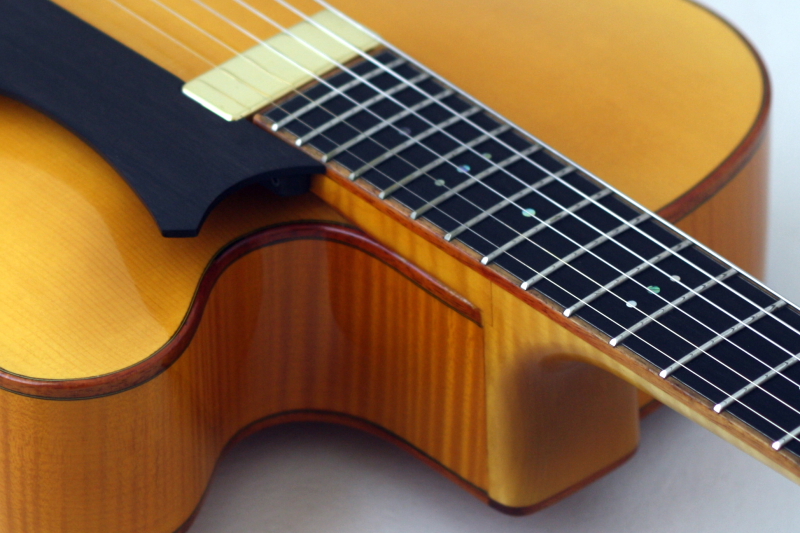
Made by hand in the Bailey workshop- By Dave Fletcher…
-

- Ebony parts
-
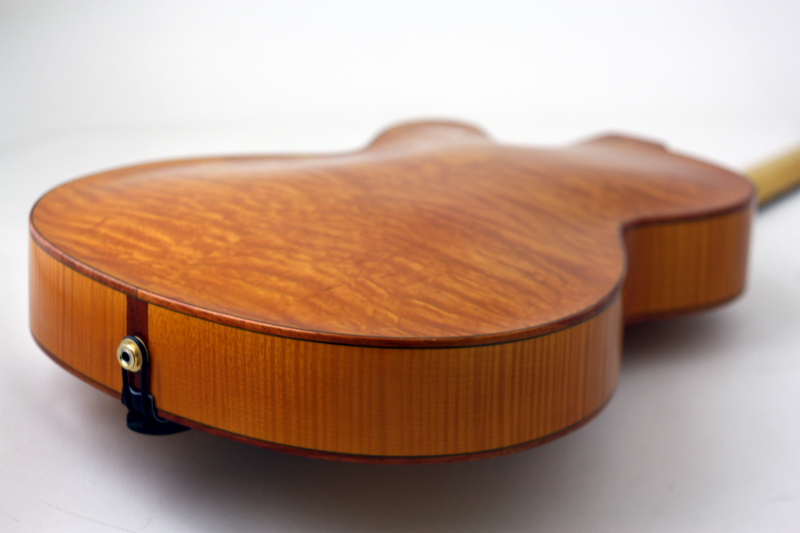
- Koa end graft and binding
-
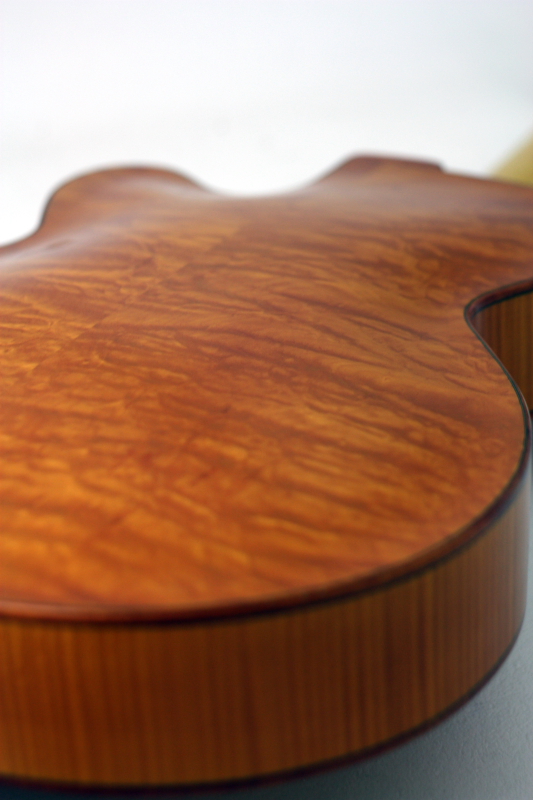
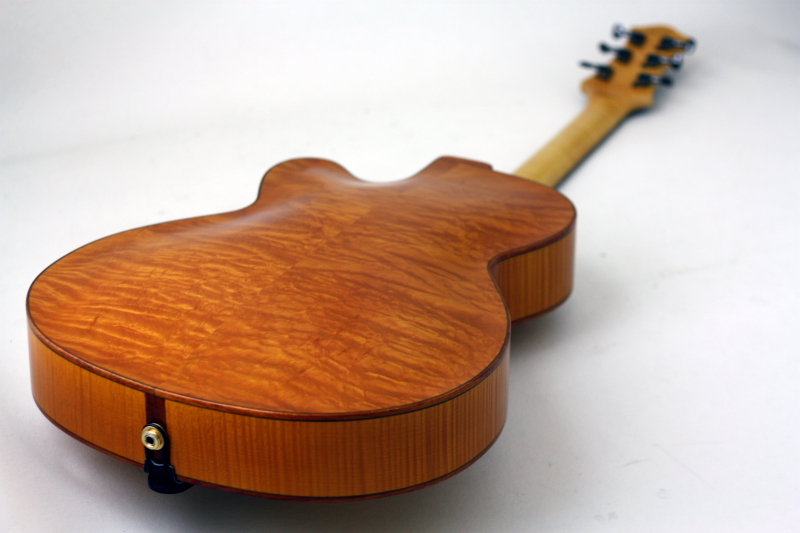
- Voluptuous back carve
-

- Quilted maple back
-

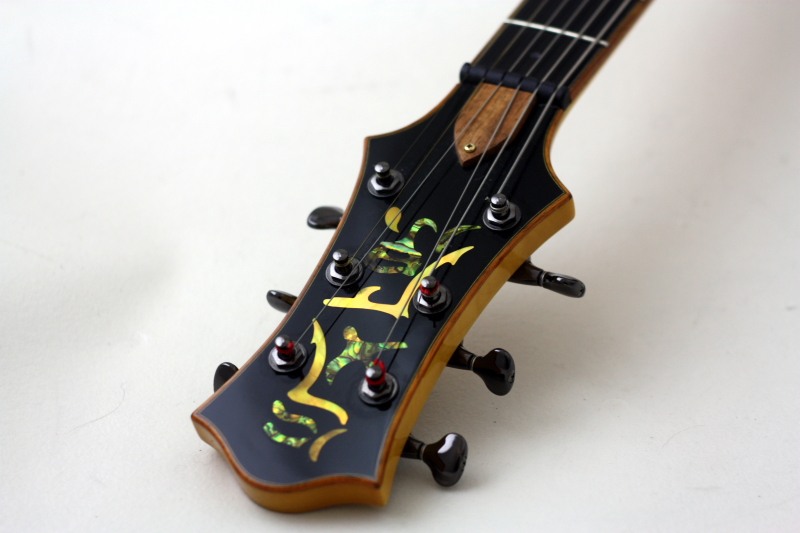
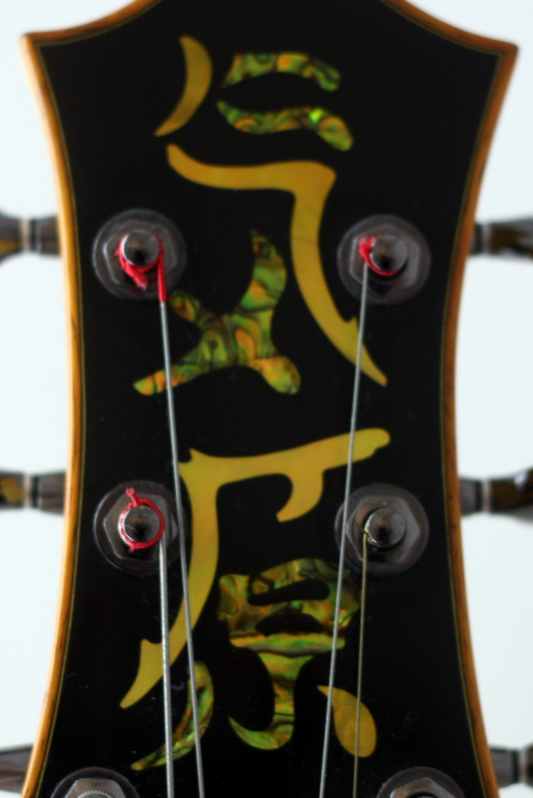
- Custom headstock
-
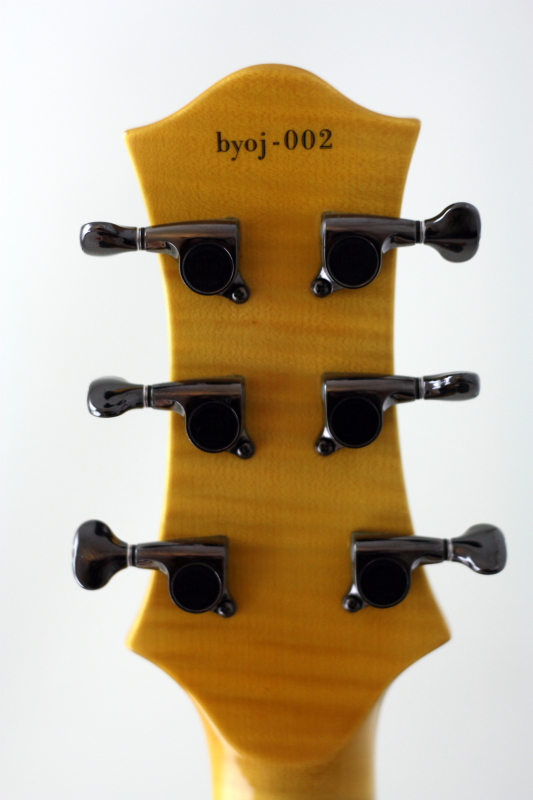
- Flame maple neck
-

- Flame maple sides
-
- Headstock inlay
-
- European spruce top
-

- By special request

-

- A work of art
-

- Made in the Bailey workhop

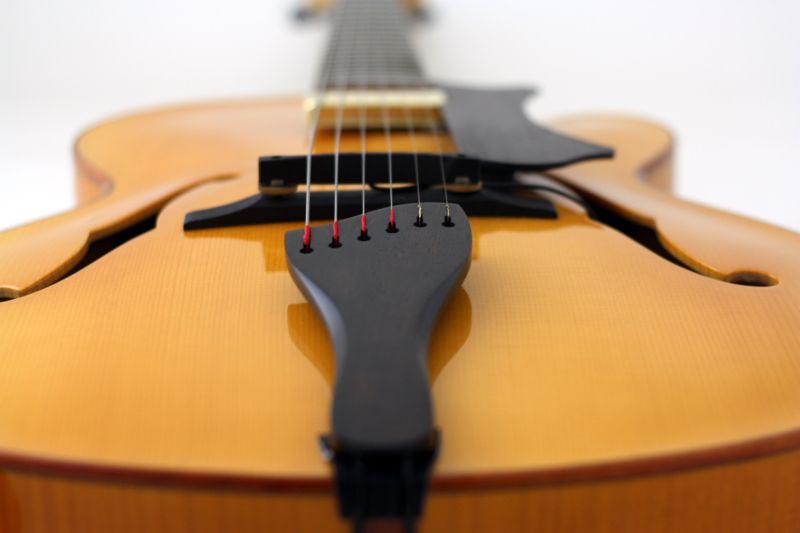
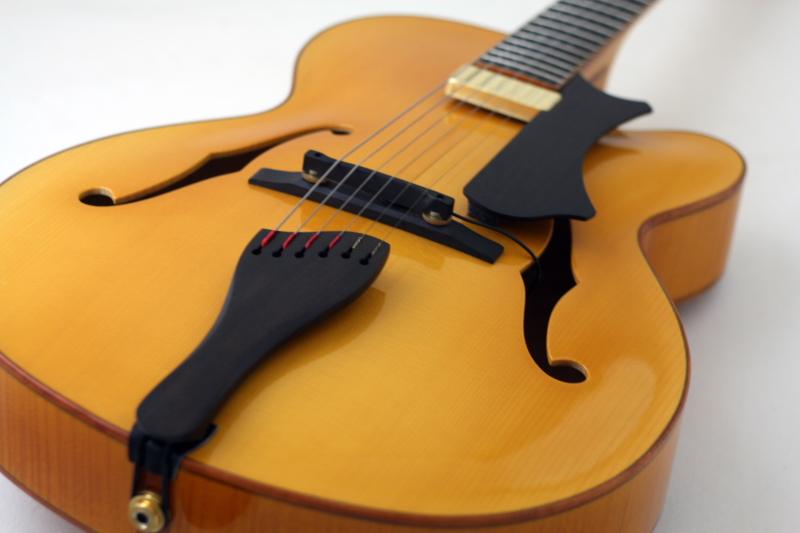
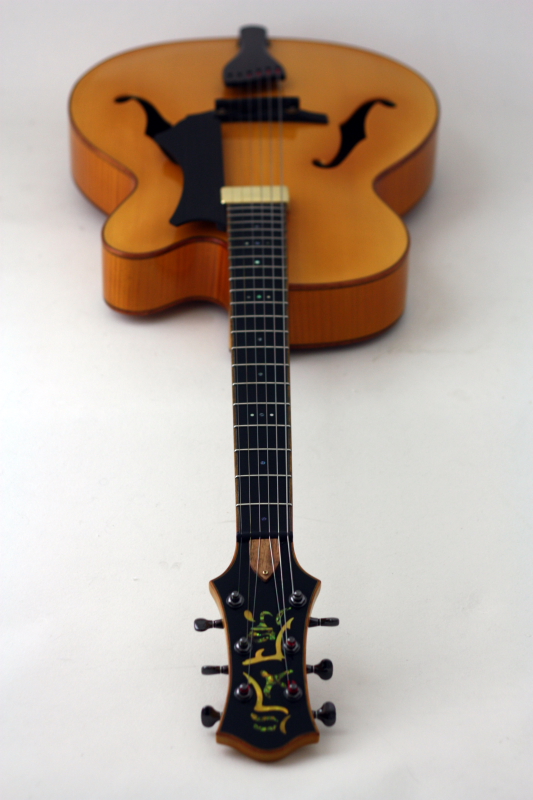
‘Build your own Archtop’ is only available by special request…but it would be my pleasure to build one for you! Take a look at the range of Bailey Archtop Guitars
Dave took a full 30 days in the workshop spread over 18 months to complete this beauty, mainly due to the delicate binding and inlays, not forgetting the full nitro gloss. He brought it along to show us last week when he came on the custom course to build his second guitar, so I took the opportunity to take a few snaps.
I thought I would feature his first guitar while he is waiting for pictures of his latest work being sprayed. This is one of the finest guitars ever to be made on any Bailey course. Now you know why we call him Archtop Dave! [email_link]
Build your own custom guitar- Kevin McKeown- Spray job
Colour test- Wine red
-
- Looks pretty good to me!
-
- The neck and body are sealed
-
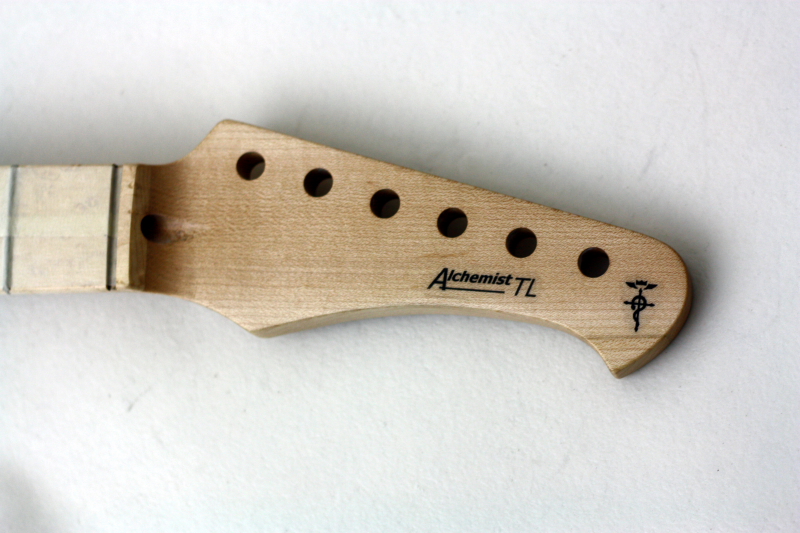
- Logo’s
-
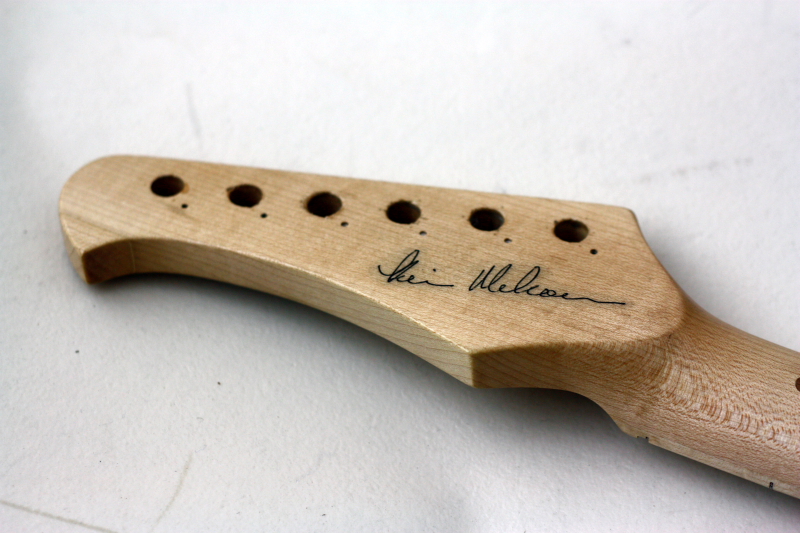
- The makers mark…
-
- Fake binding
-
- The back is also coloured
-
- Red wine Stage 3
-
- Red wine stage 2
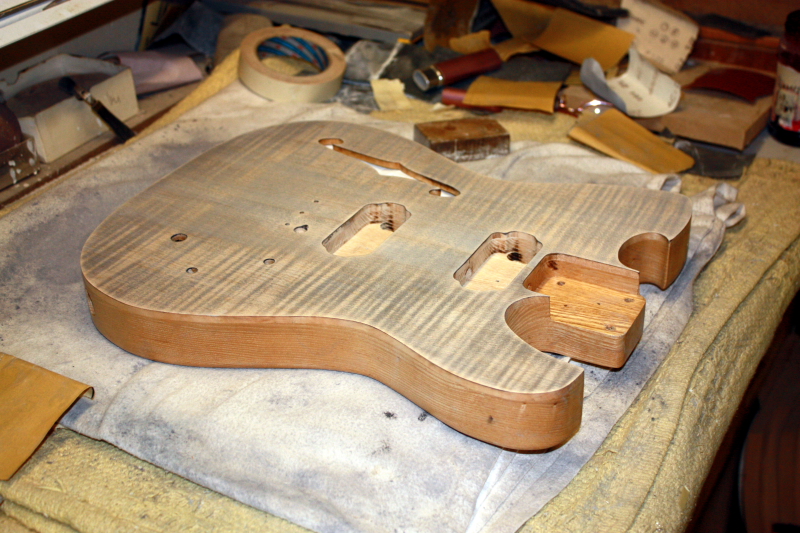
-
- Red wine stage 1….
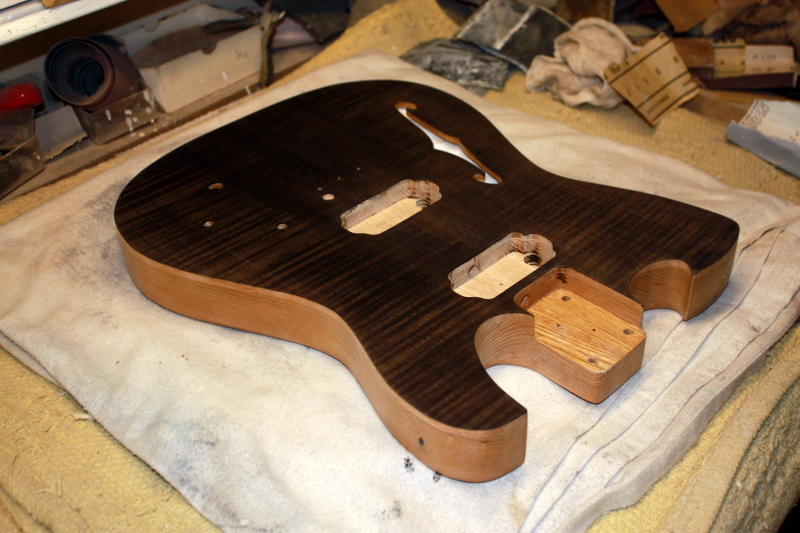
-
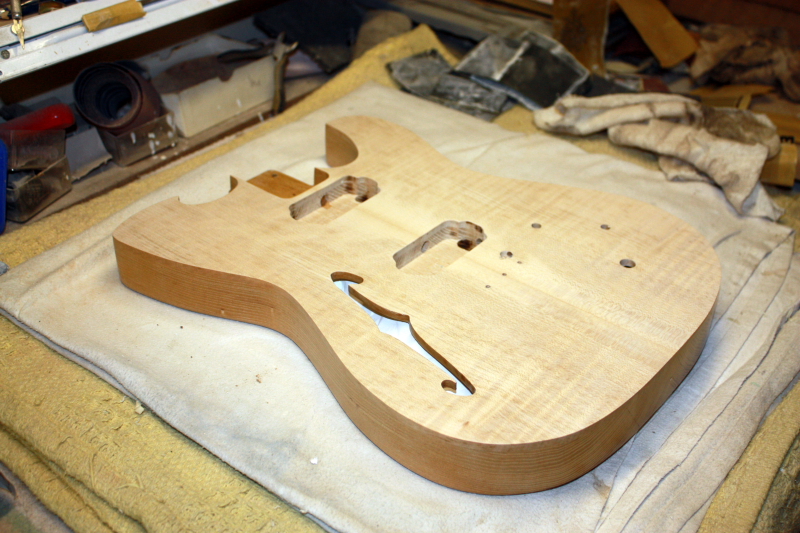
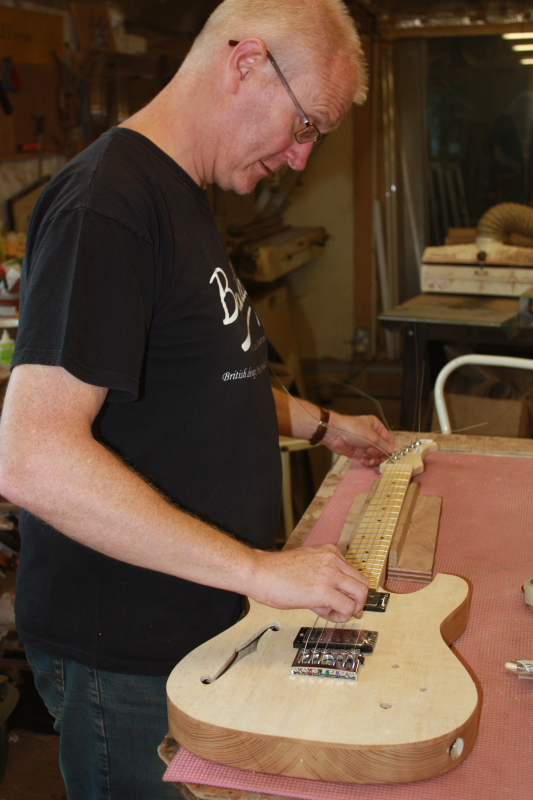
- The guitar is disassembled again ready for spraying
-
- Kevin left his guitar with us for spraying
-
- This is what he started with
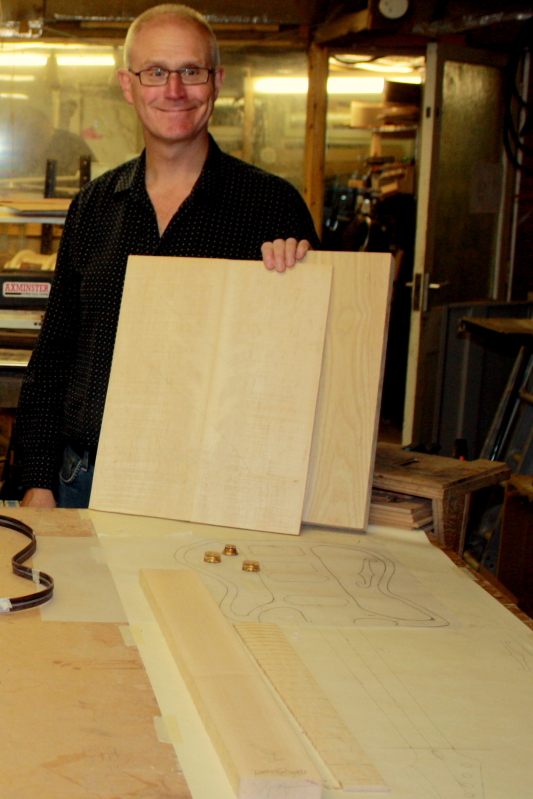
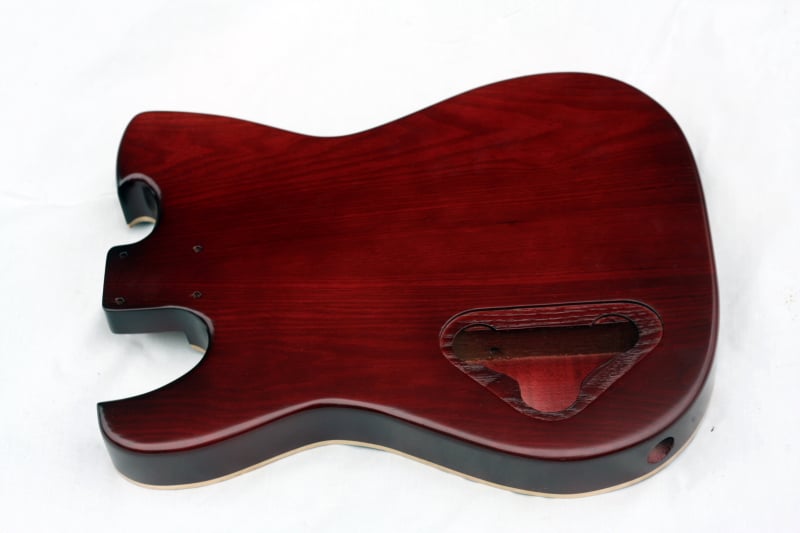
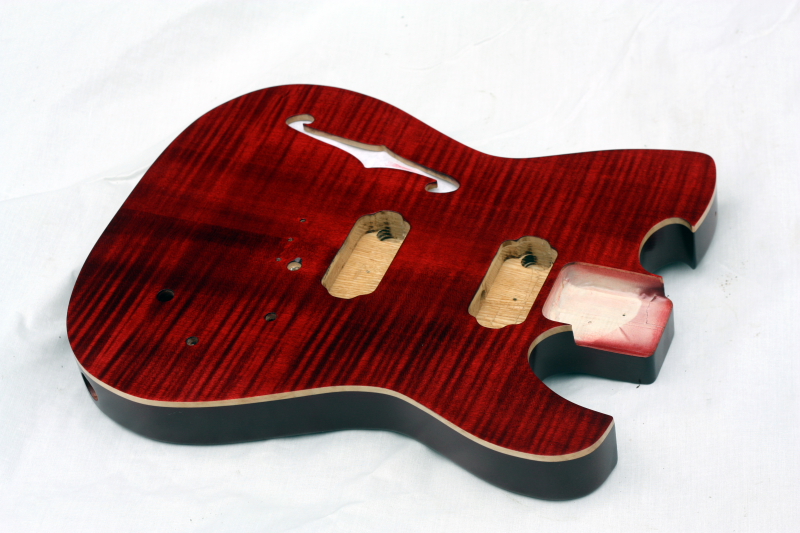
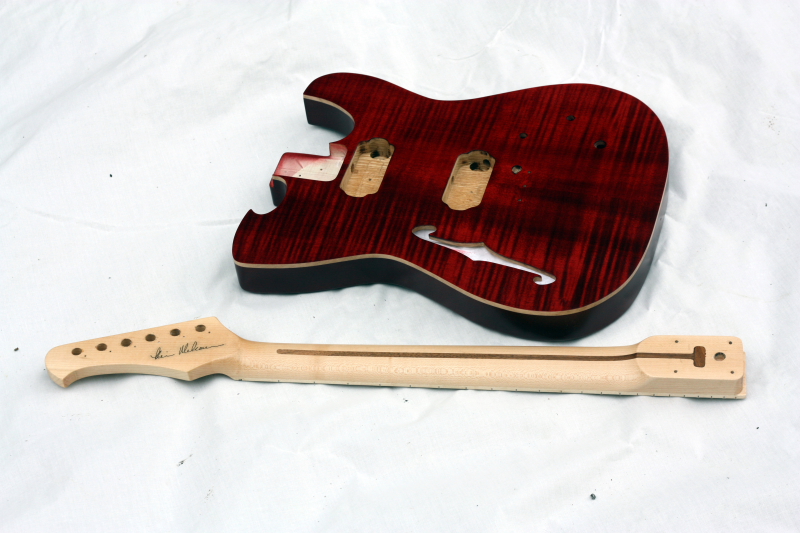
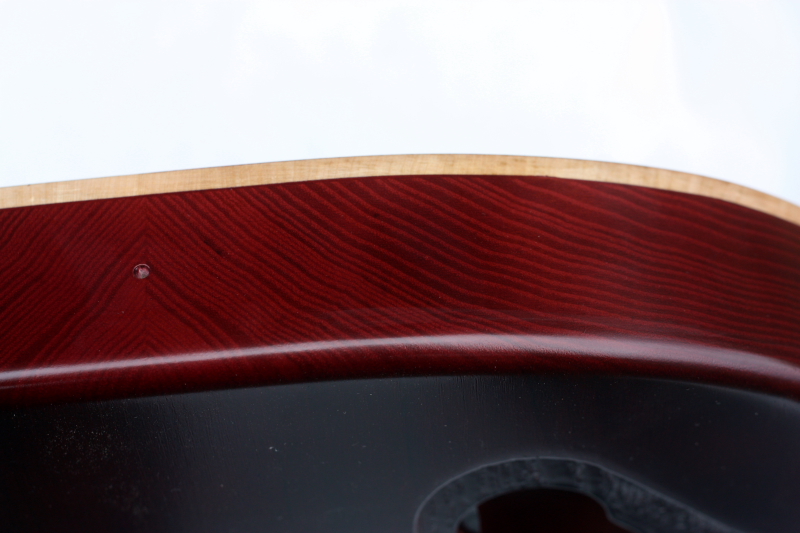
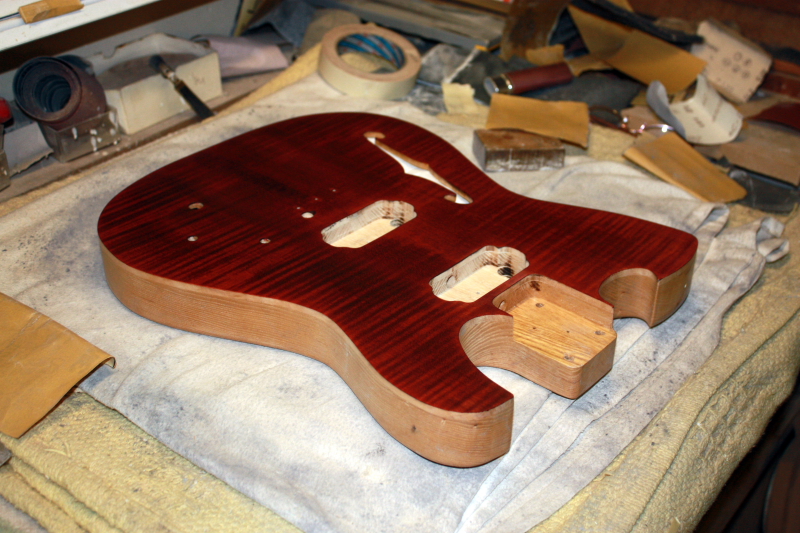
Kevin made this guitar on our build your own custom guitar course and decided to leave it here with us to spray. It seems Red Wine as a colour is very popular at the moment. Kevin wanted the back done as well, and fake binding, so we masked off the maple cap on the side so it is still the natural colour of the wood.
After the colour was applied a thin sealer coat was sprayed to fix it. The signature and logos were water decals which are also sealed. If Kevin likes the colour then we will continue to gloss the body- the neck will remain matt and natural coloured.