
Blog
Bailey custom acoustic from 40,000 year old Kauri-p4
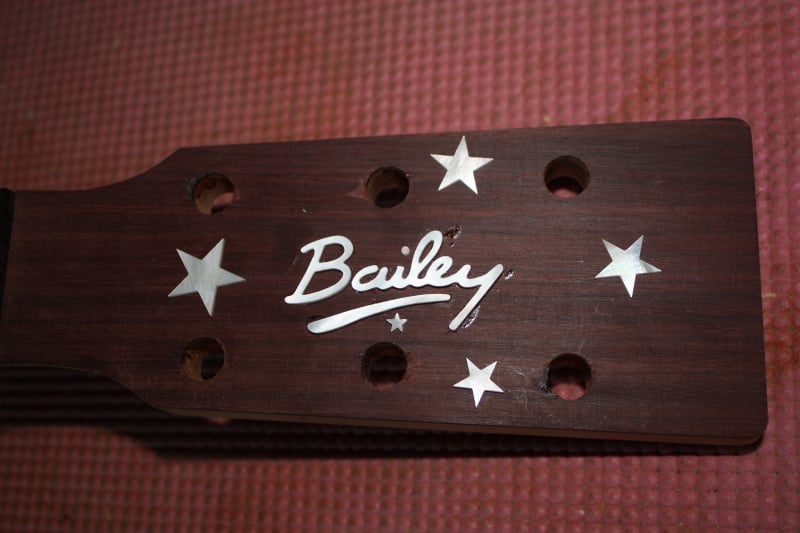
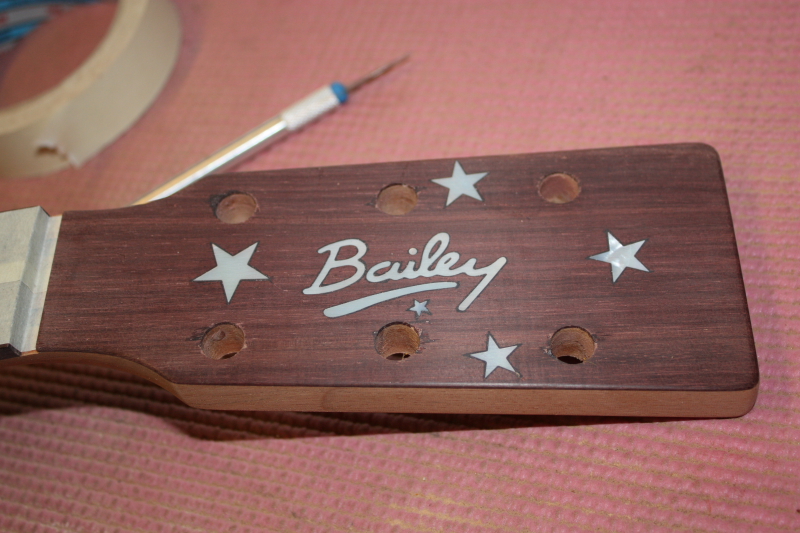
…Mother of Pearl ‘Southern Cross’ inlay…
-
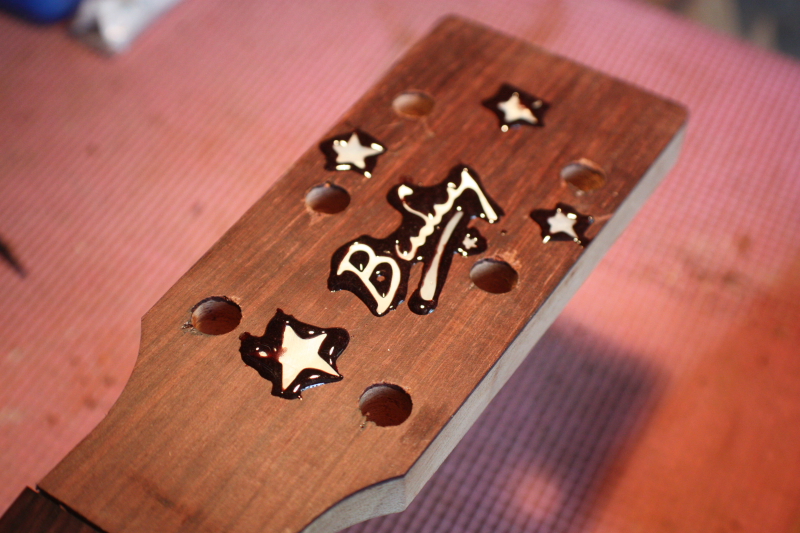
- After the glue is hard the inlay is sanded flat…it’s finished!
-
- The inlays are glued with a paste made from epoxy and wood dust
-

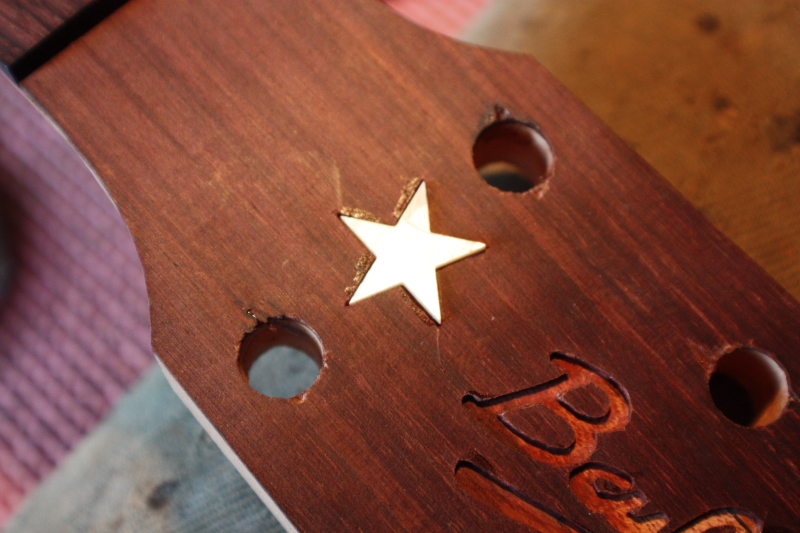
- Test fitting the inlays- they should drop in without any force
-
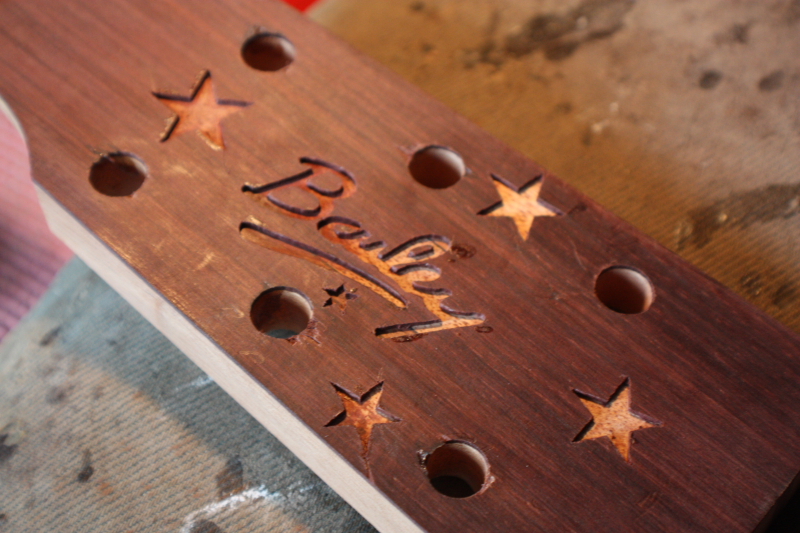
- A bit of work on the corners with a scalpel and they are ready for the inlays
-

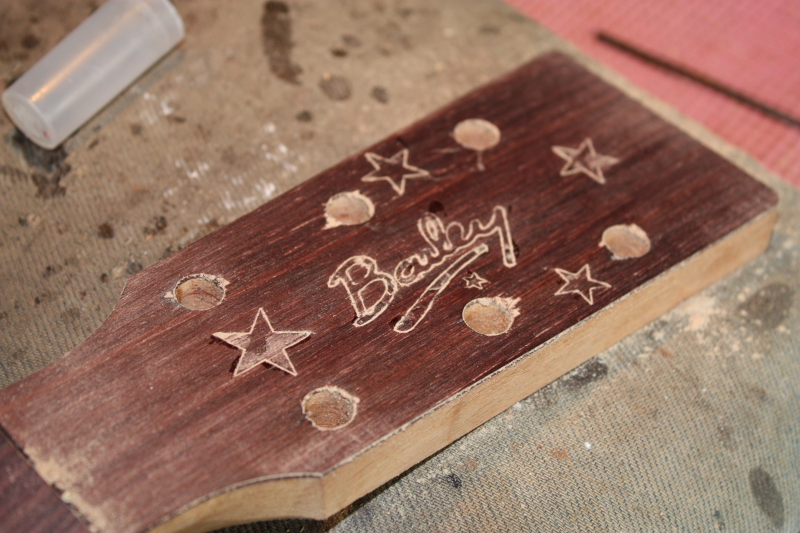
- After a second finer pass with a tiny 1/32″ cutter
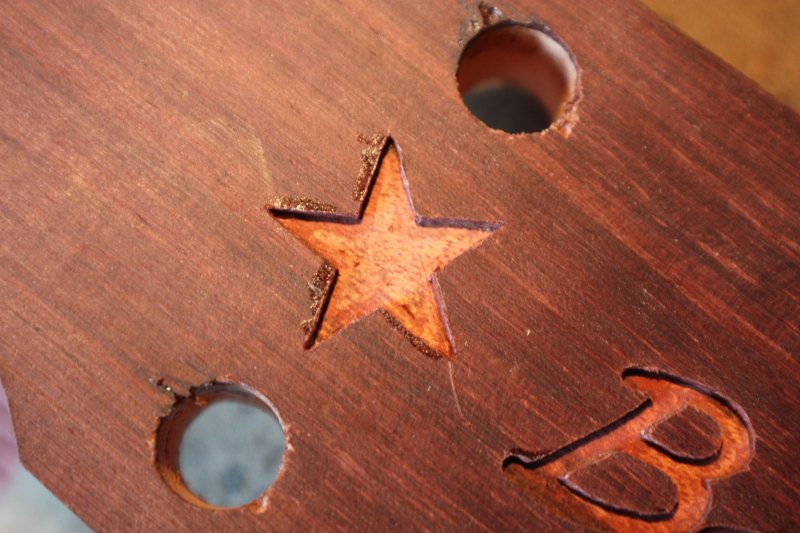
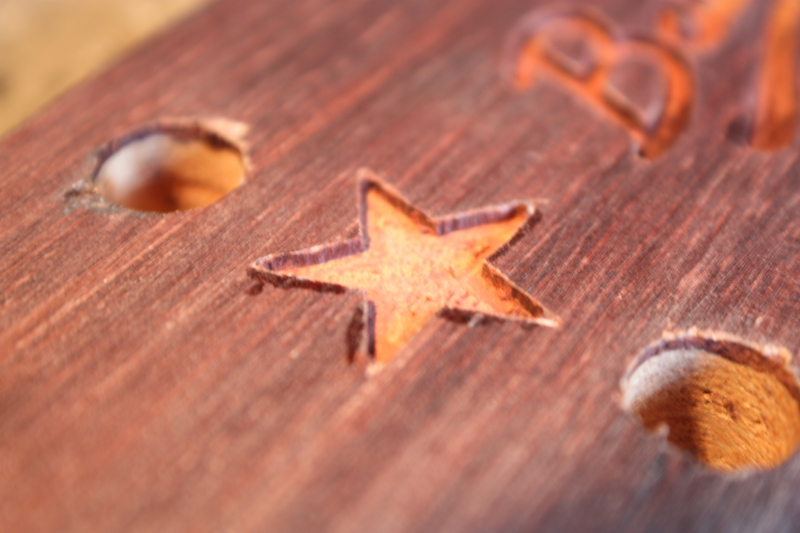
-
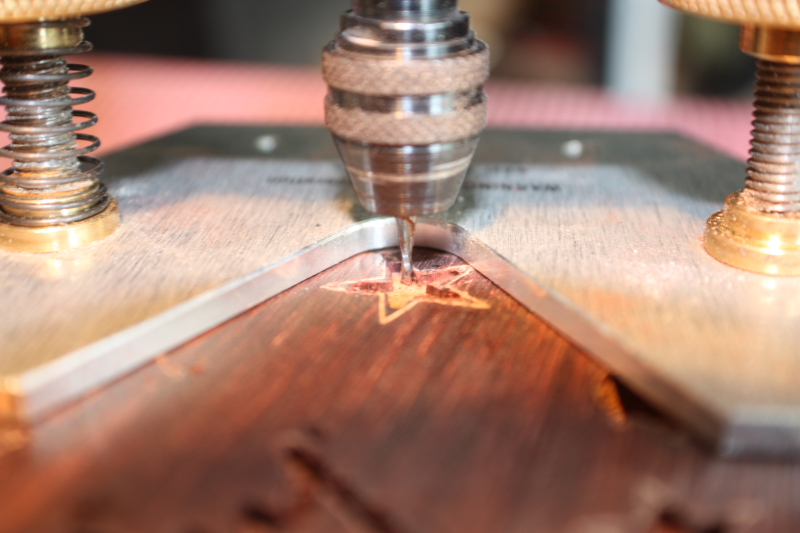
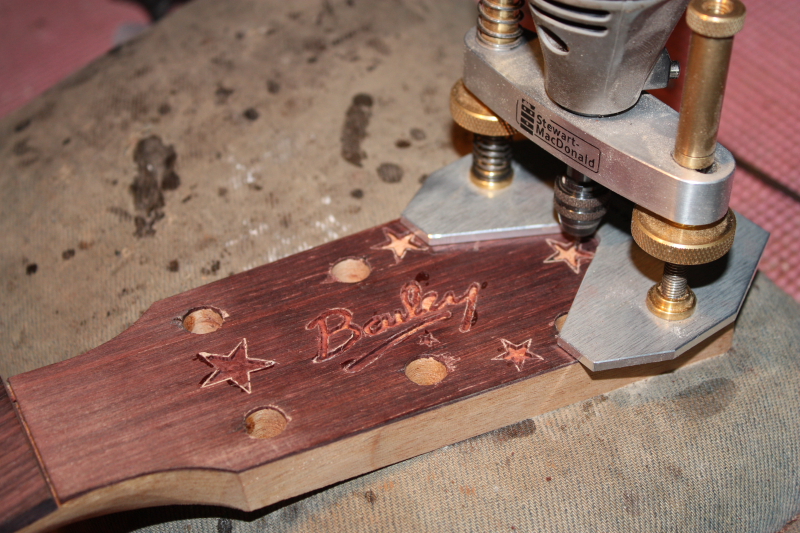
- A close up of the router in action
-
- A mini router is used to make the channel
-

- A scribe was used to score around the outline and the pieces are removed
-
- The pieces are temporarily fixed in place for marking out
-
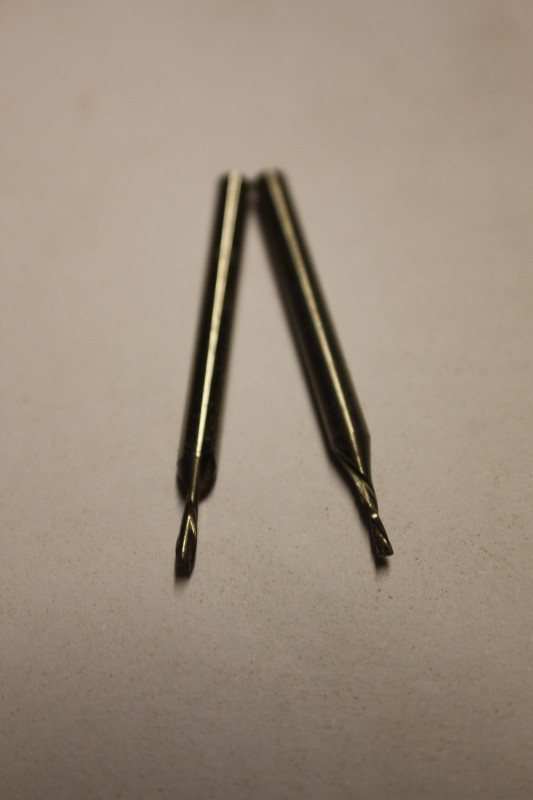
- The mini spiral downcut router cutters leave a clean edge
-
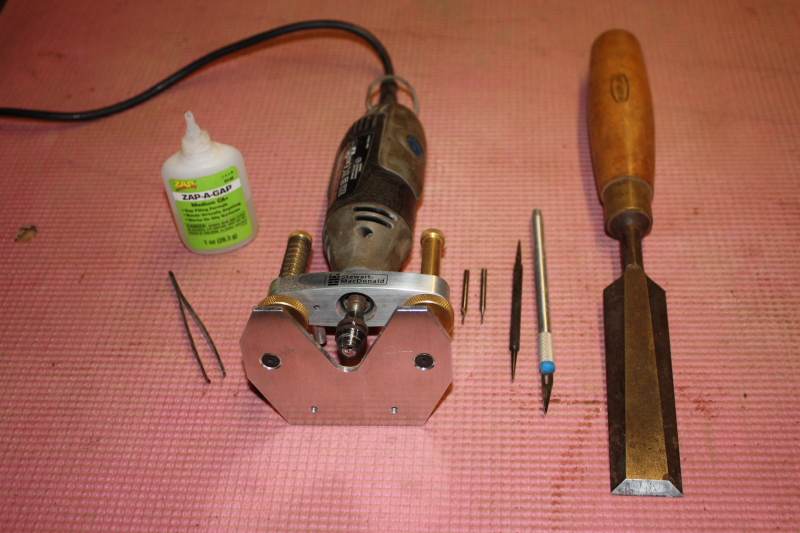
- Super glue and tweezers, mini router and cutters, scribe and scalpel, and a large chisel for prising off the peices
The guitar is now fretted and inlaid ready for finishing…
Sandy had mentioned some kind of Southern Cross inlay, so this is what I came up with. As luck would have it I had four of the stars left over from a previous project so only had to make the smallest one. I checked the relative brightness (magnitude) of each star to make sure I got them in the right place using the Wikipedia entry on The Southern Cross. Being from the Northern hemisphere I have never actually seen this constellation, so hopefully I can be forgiven for not knowing them by heart. I had to be slightly artistic with the exact placement to fit them around the tuners and logo, so please do not use this as a star map to navigate by or you may never be seen again!
How to make a star inlay-2/2
Inlaying the star into the fretboard
-
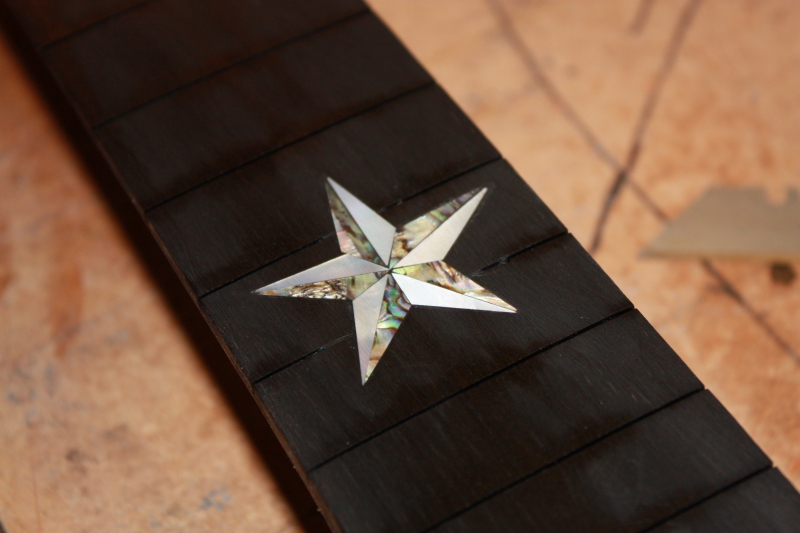
- Finished- An inlay to be proud of, well done Fiona!
-

- The inlay must be sanded flush to the fretboard surface
-
- The inlay is fixed in permanently with black superglue

-
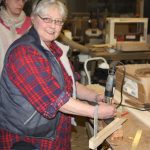
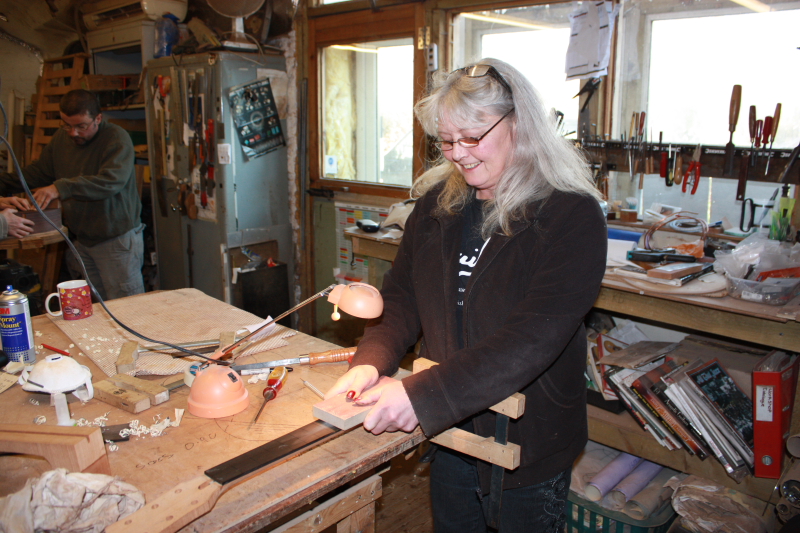
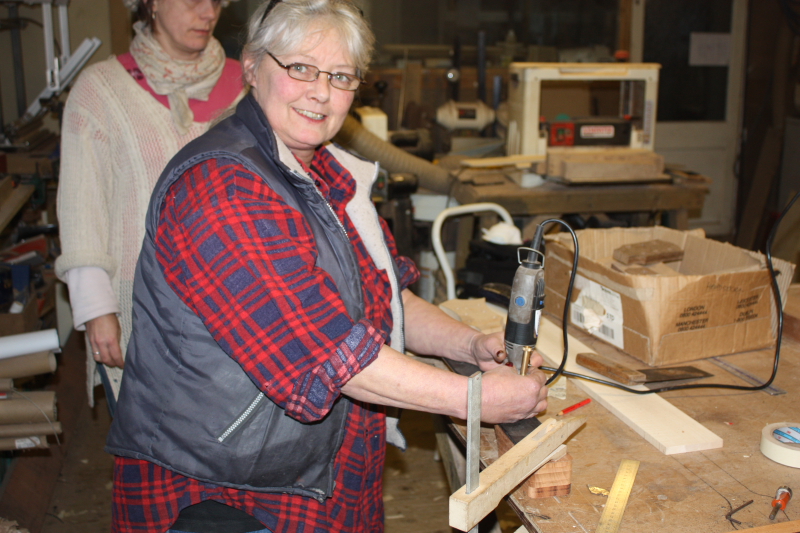
- Fiona is routing the recess for the inlay to fit into
-
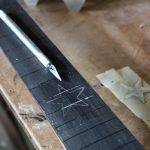
- A scalpel was used to score all the way round- rubbing in light coloured dust shows up the shape

-
- The inlay was fixed in place with ordinary white glue for marking out

You may remember Fiona a while ago making her Star inlay on our ‘build your own’ course. If you are interested I wrote a full explanation of how to inlay mother of pearl a while ago. Although the shape is different we used exactly he same method.
Now it is finished, looking beautiful and the neck is ready for fretting. She will be back soon to continue working on the rest of her guitar….
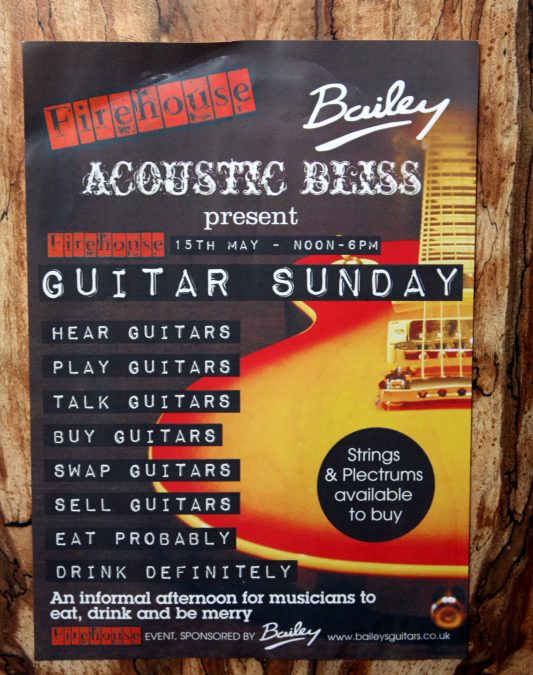
Guitar Sunday at The Firehouse- Sunday 15th May
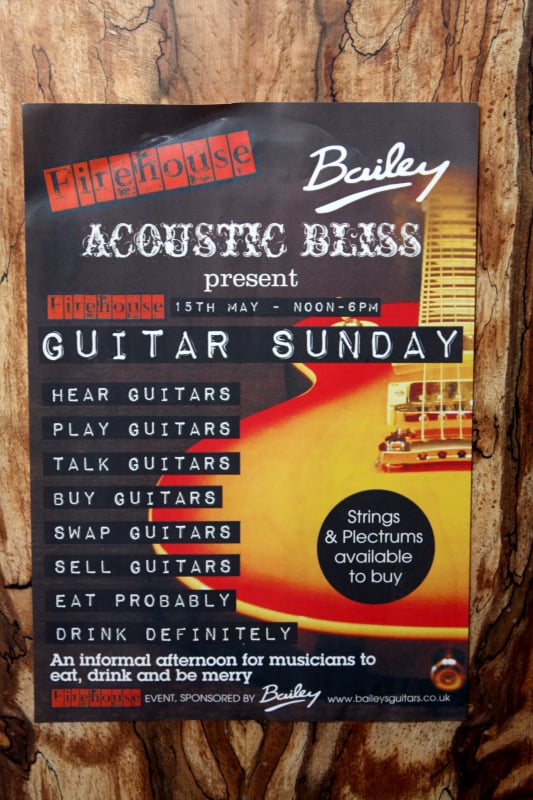
Bailey Guitar Sunday@The Firehouse
Venue: The Firehouse
Date: Sunday 15th May
Time: 12pm- 6pm
The last Guitar Sunday was such a success the Firehouse invited us to do another one! We will be there tomorrow with a collection of instruments so come along if you want to try out a Bailey guitar.
We will be selling strings, picks, guitar accessories and taking orders for anything guitar related so if you need anything we’ll be able to get it for you.
There will also be displayed of selection of wood and work in progress from the Bailey workshop.
If there are enough folk and anyone is interested I may do a talk on ‘set up and maintenance’ essential info for anyone with a guitar.

Bailey custom acoustic guitar- Ziricote and Bearclaw Bootlegger-P1
…Decisions, decisions…
Read part 1, part 2, part 3, part 4, part 5, part 6
-

- Bear Claw Sitka Spruce-1
-

- Bear Claw Sitka Spruce-2
-

- Ziricote-back and sides

-

- Mahogany neck blank

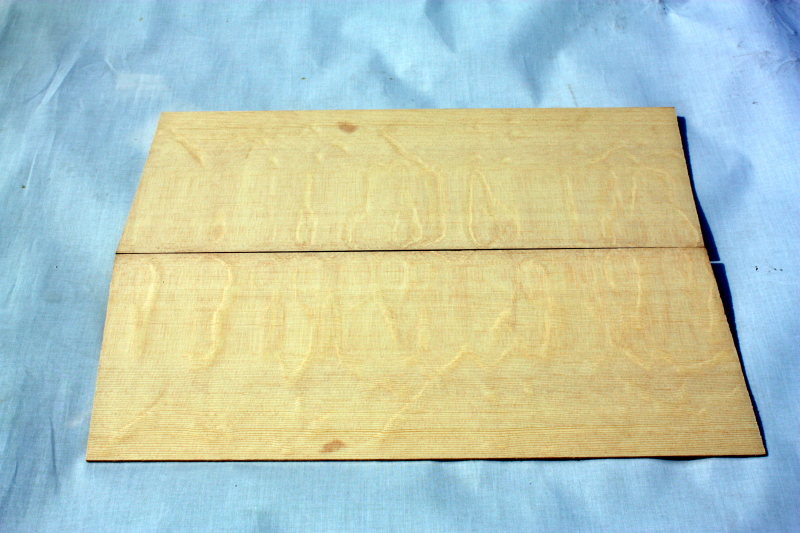
Euan chose Ziricote for the back and sides of his custom Bootlegger and Bearclaw Sitka Spruce for the soundboard. The bootlegger is quite large (16″ across), so I had to search for a piece big enough which took some time. This was the only one I could find which fitted the bill and fortunately it is a stunner! The figure (grain pattern) in Ziricote is called a ‘panarama’- you can see why, It looks like some far off exotic landscape…
There is a choice of two Bearclaw soundboards for Euan to choose from, both look great. Whichever one Euan doesn’t want I have plans for!
For the neck I found a piece of mahogany from the same batch as found on this Bailey Companion Euan liked. Of course every piece is individual and they look different under different lighting conditions but this is as close as we are ever going to get. This neck blank was originally put aside for Preston’s Baritone but we chose instead to use some reclaimed mahogany for that.
The fretboard and bridge are both to be ebony, the black will match well with the dark lines on the Ziricote.
I have already joined and thicknessed the wood for the back and sides, so next week I will be able to get started on it properly while the lacquer dries on the Ancient Kauri guitar…
Bailey custom acoustic from 40,000 year old Kauri-p3
Working on the neck
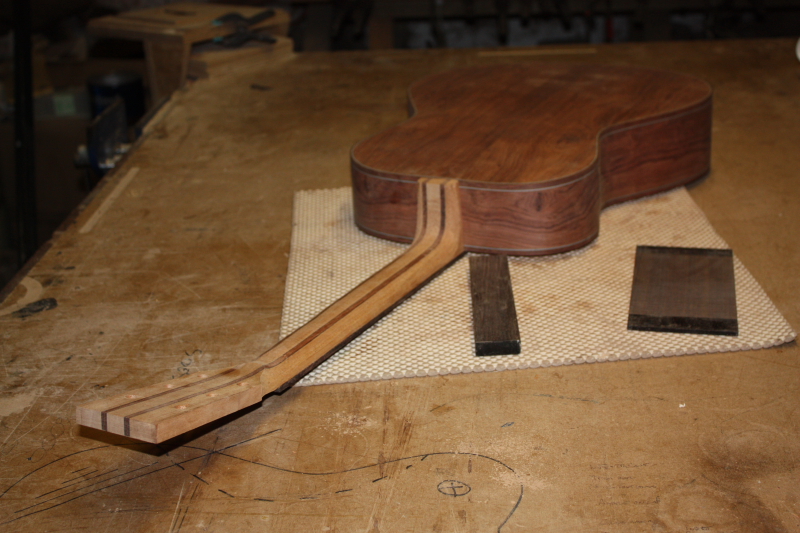
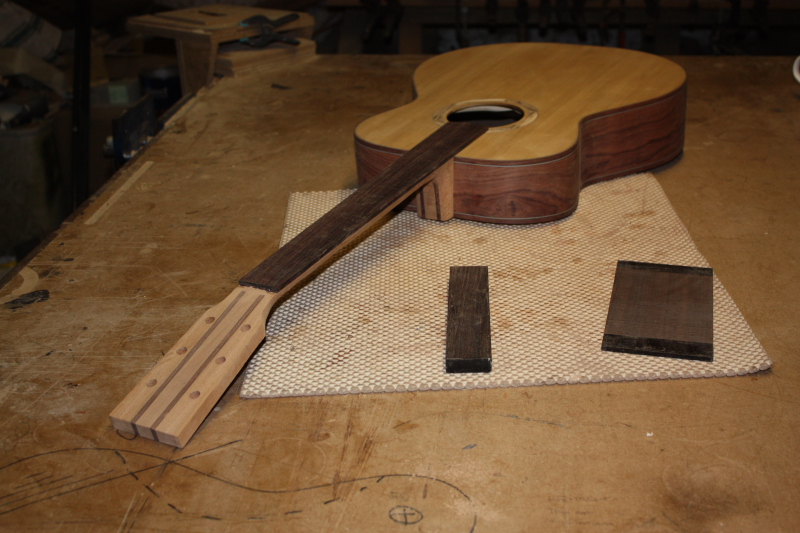

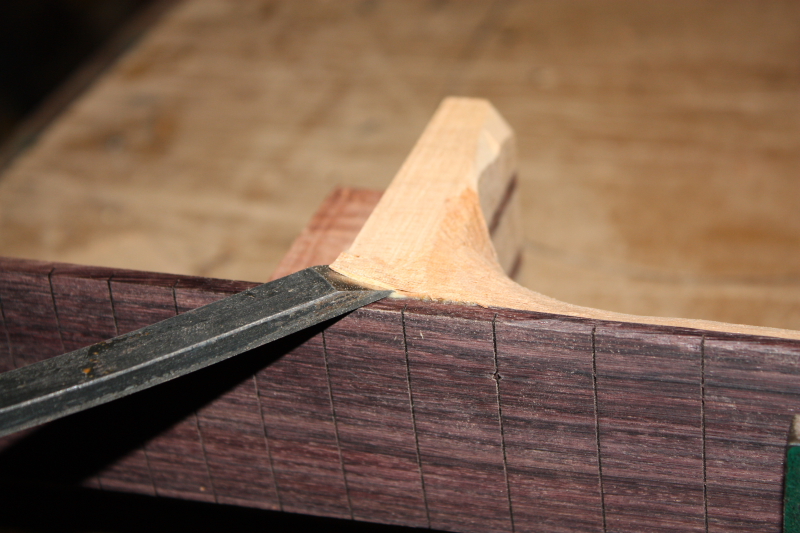
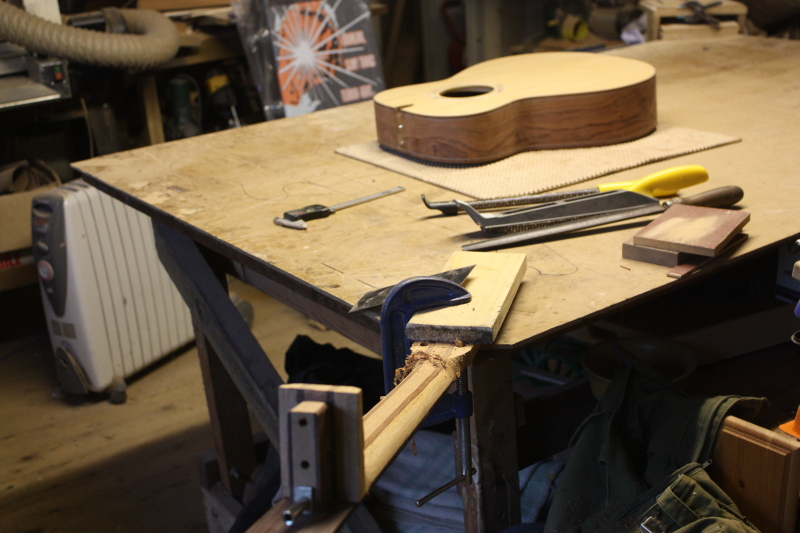

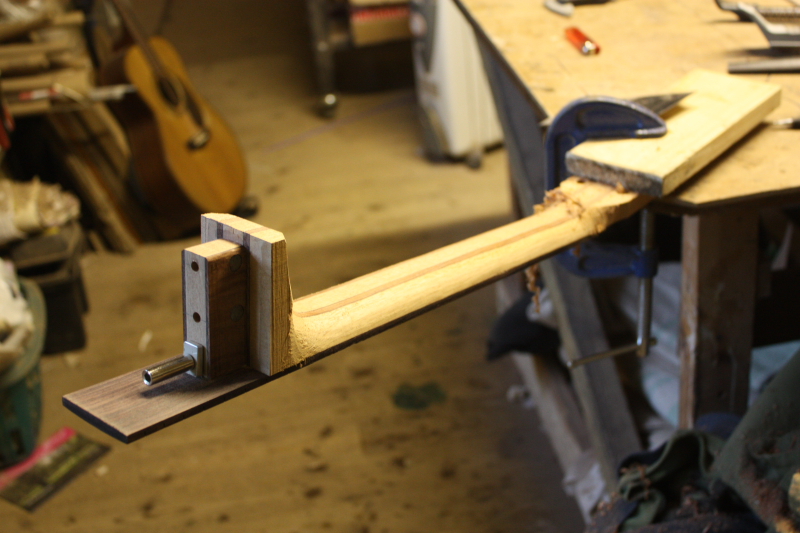
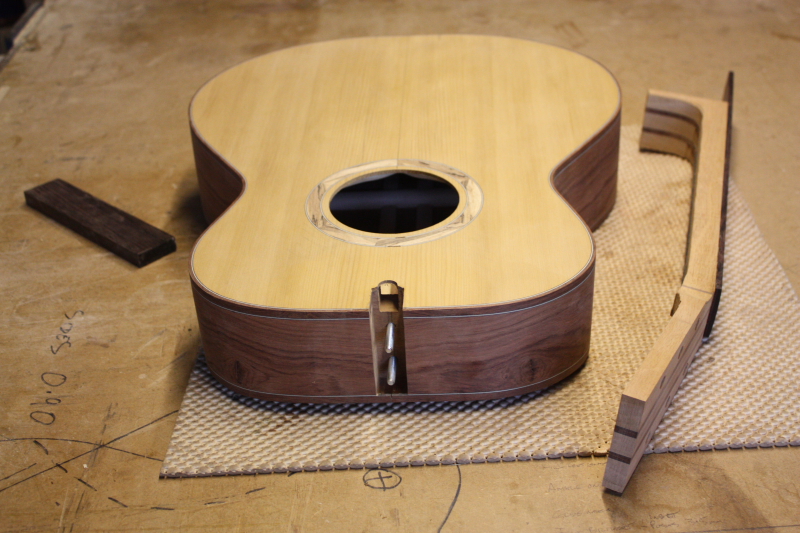
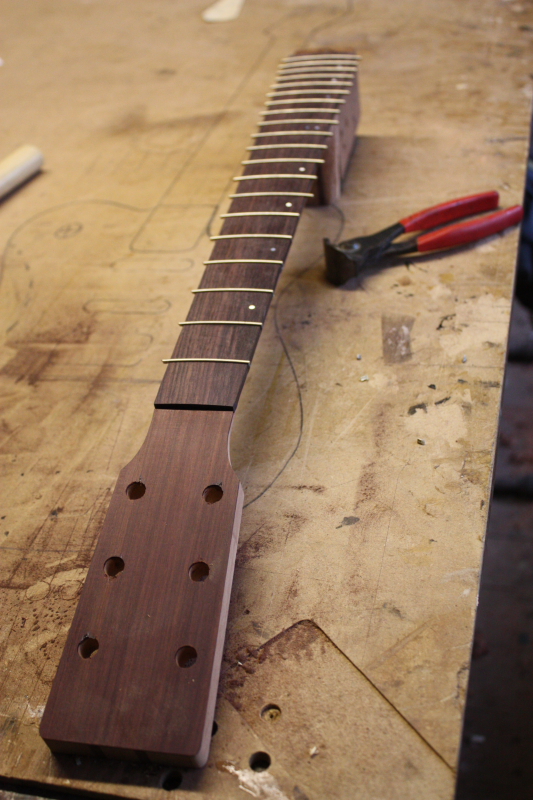
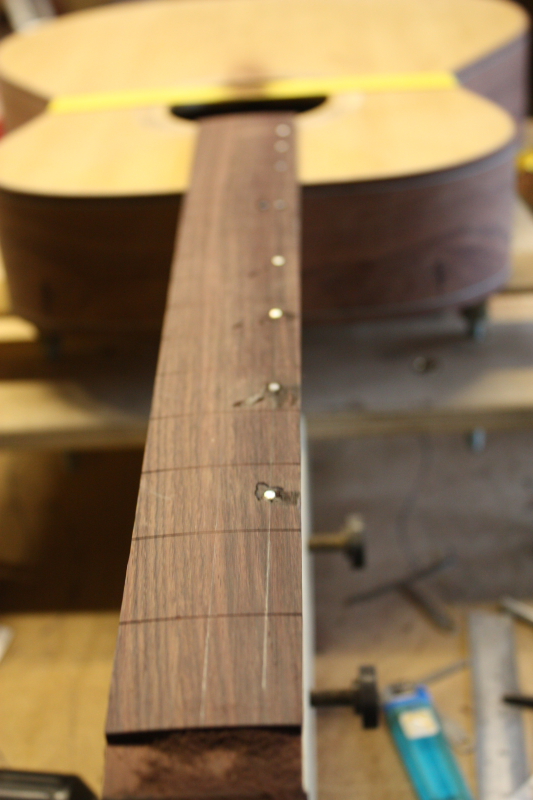
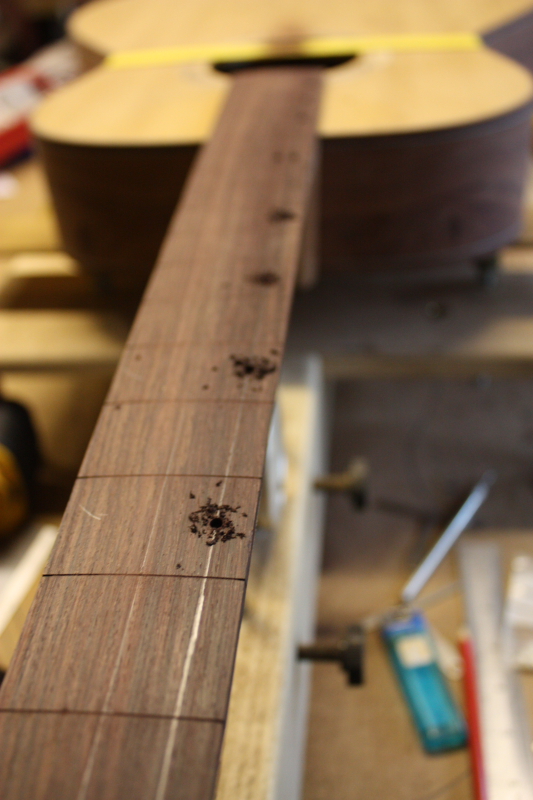
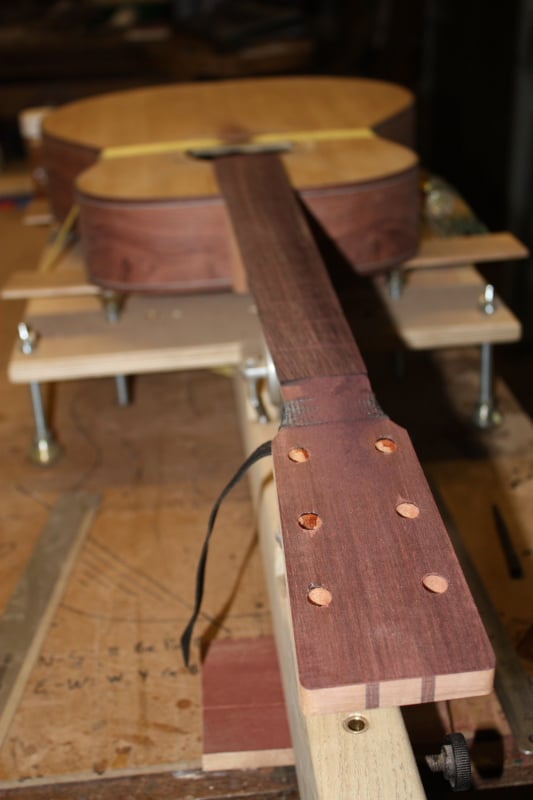
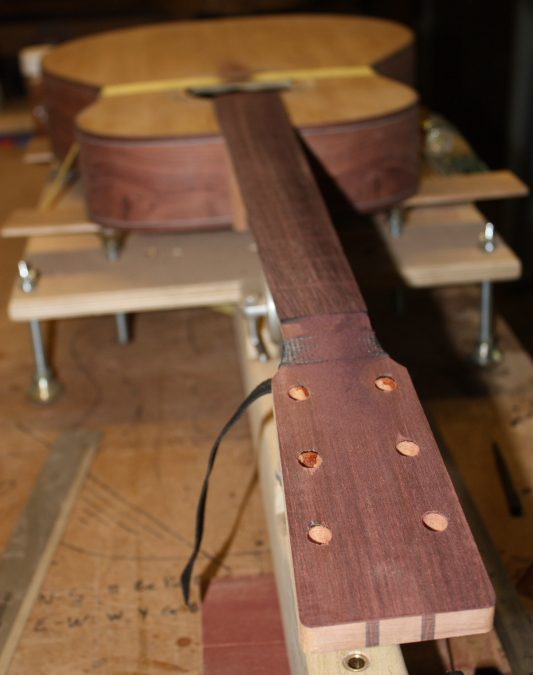
After the neck was carved, I strapped it into the string tension simulator. This simply holds the guitar firm while pushing up on the back of the headstock and pulling down over the nut area. The amount of pressure is adjustable, which enables me to ‘dial in’ the stresses on the neck as if the strings were on and tuned to pitch. This greatly improves accuracy and removes any guess work from the equation. With the fretboard level the neck was removed for fretting to avoid damaging the ancient kauri soundboard.
Well it is starting to look like a guitar…I still need to put the frets and the side dots. I will also glue on a rosewood heel cap, made using an off-cut from the back. It needs the obligatory Bailey logo, then the neck can be sanded and the guitar will be ready for a finish.
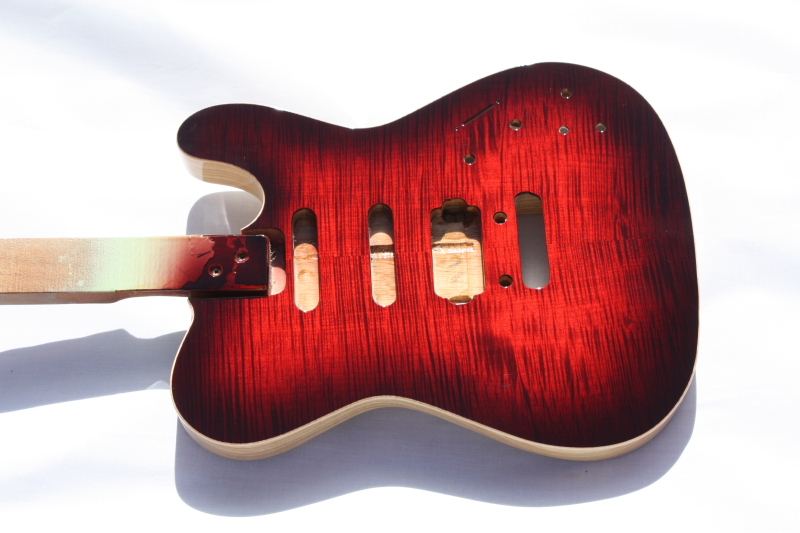
Custom Bailey for Skerryvore- Wine red burst
…Finishing…
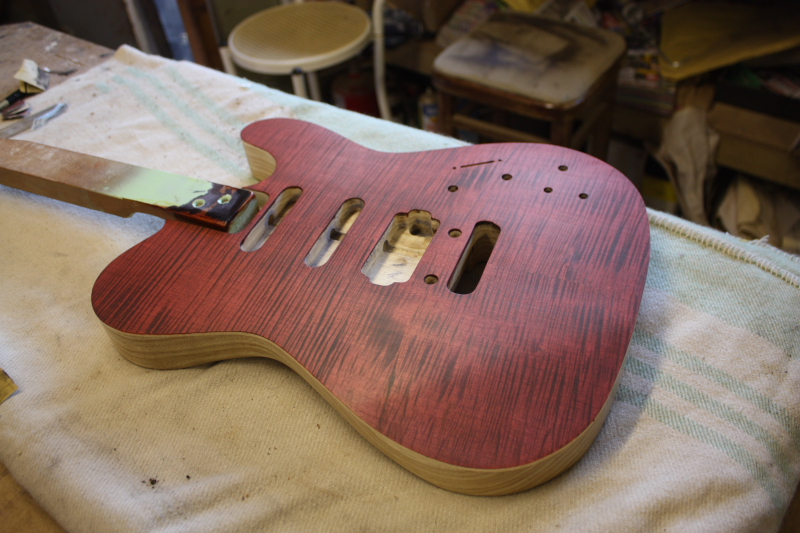
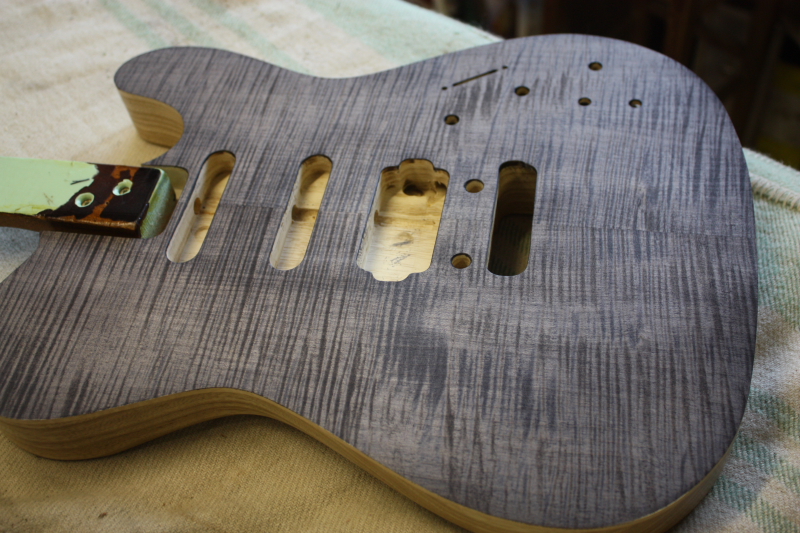
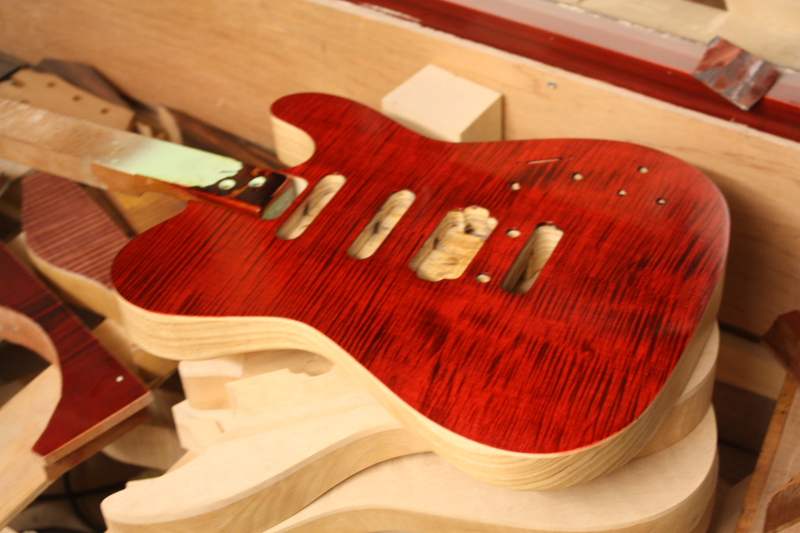

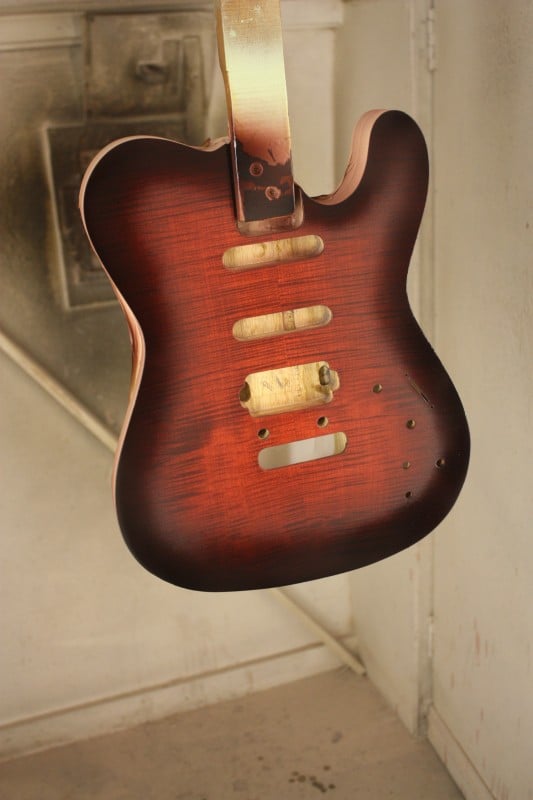
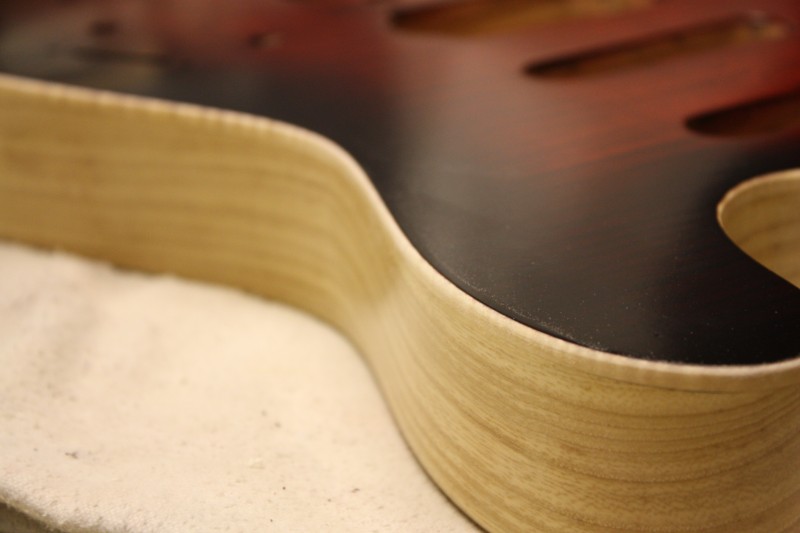

Billy wrote a full explanation of how we do this colour if you are interested in reading about it. The only difference is that this one only has the face of the body coloured, not the back or the sides.
We now need to wait at least 3 weeks for the lacquer to cure before it can be polished. Next time I work on this it will be final assembly day. I will be fitting a Fernandez sustainer and two EMG’s. The guitar will also have a trem.
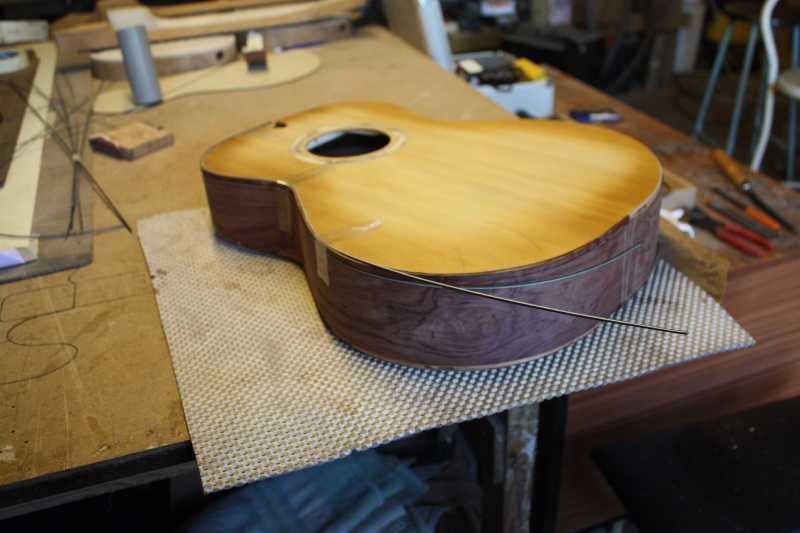
Bailey custom acoustic from 40,000 year old Kauri-p2
Making a new custom guitar from the oldest workable wood in the world!
-
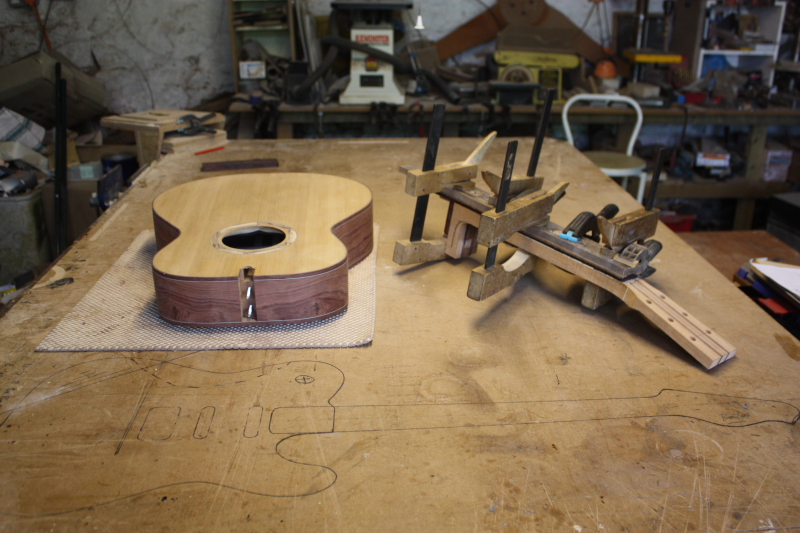
- The fretboard is glued on and left to dry
-
- The neck is now ready for the fretboard to be glued
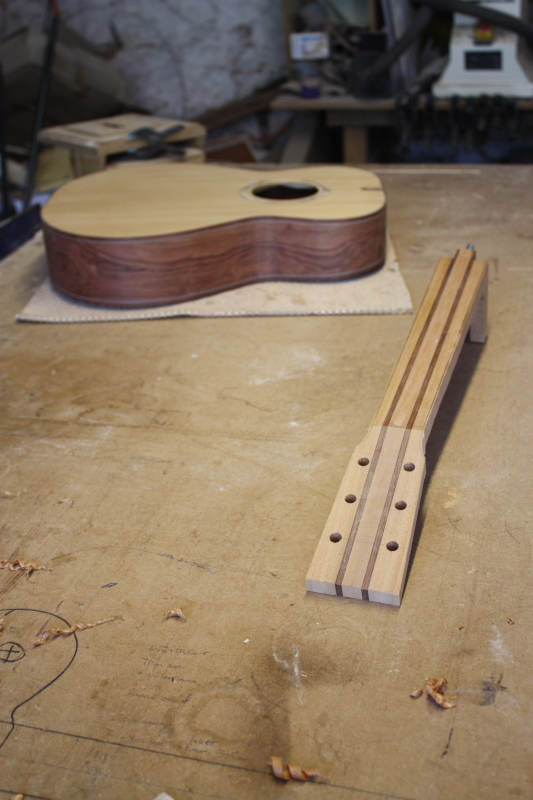
-
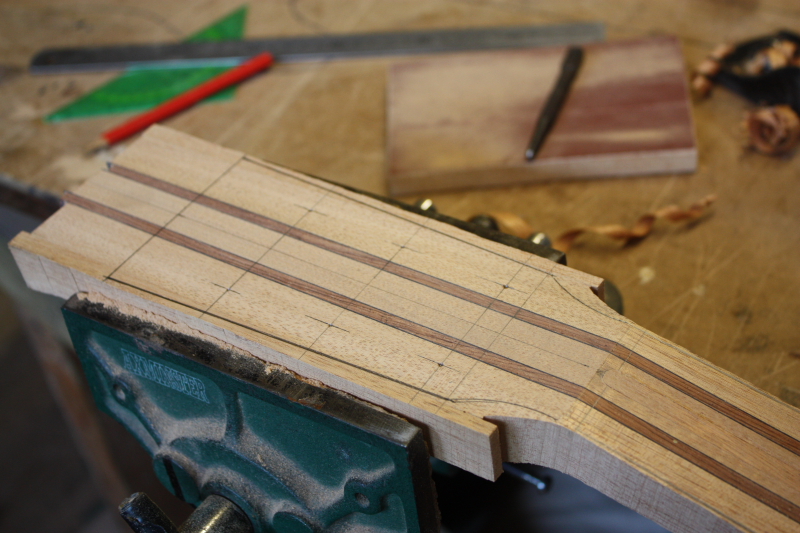
- The headstock is marked out with a pencil
-
- The extra pieces are planed level to the face of the headstock
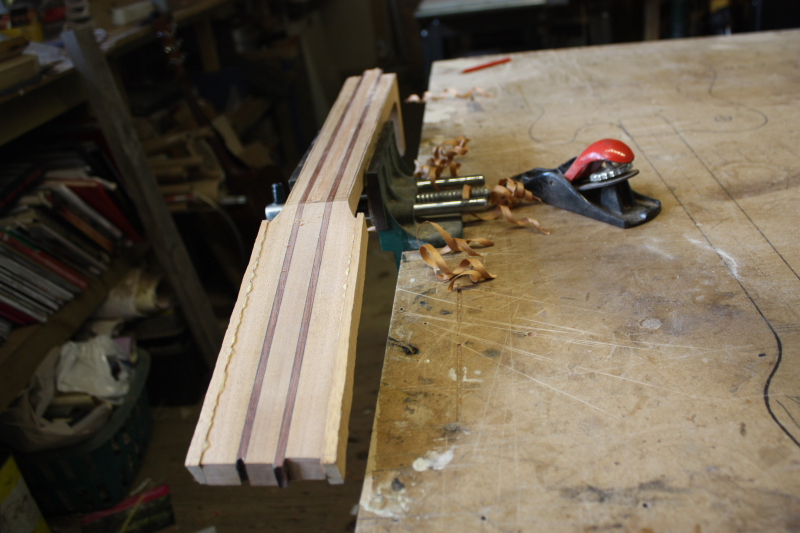
-
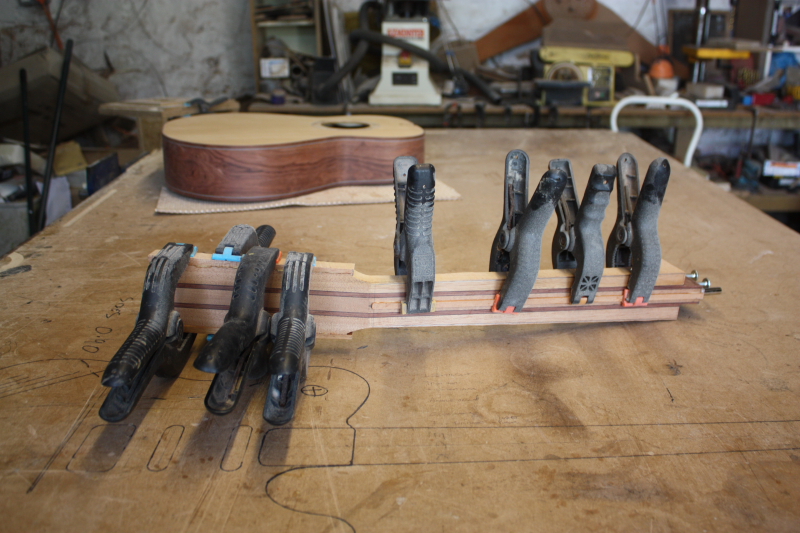
- The fillet is glued over the truss rod to hold it in place. Also wings are glued on to make the headstock wide enough
-
- Clear sticky tape holds the binding in place while the glue dries
-
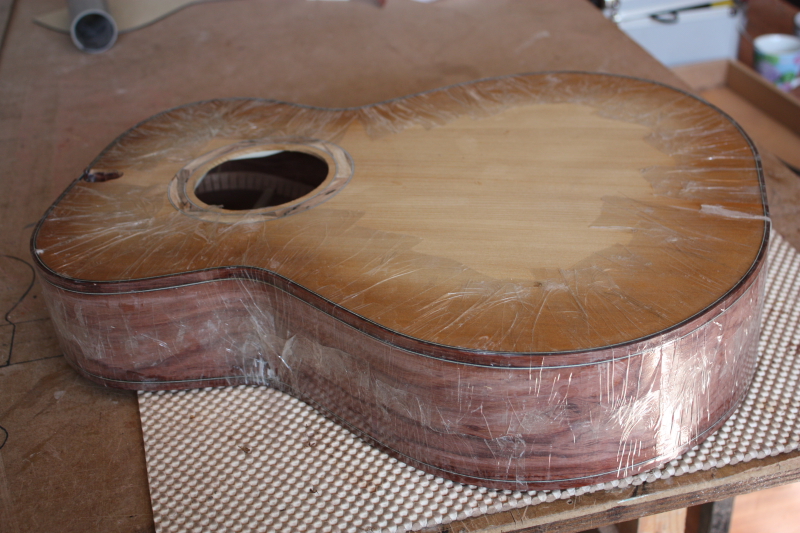
- The body is now ready for the binding to be glued on
-
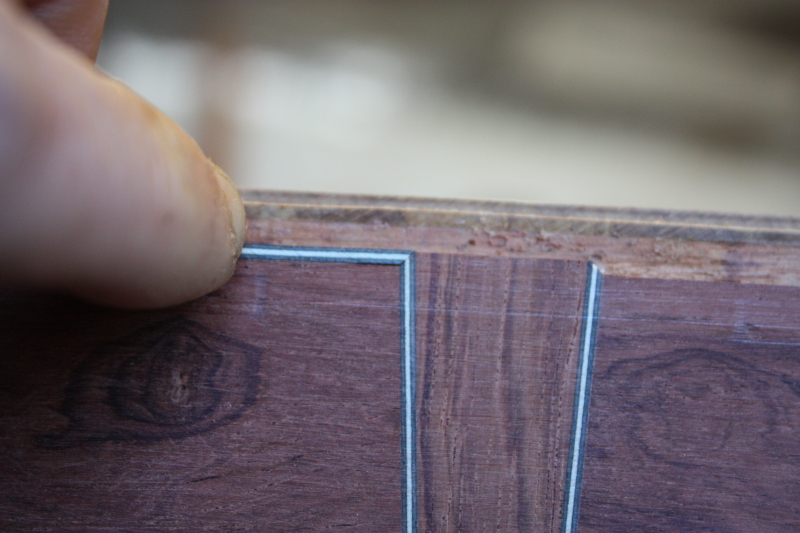
- making a perfect join in the BWB
-
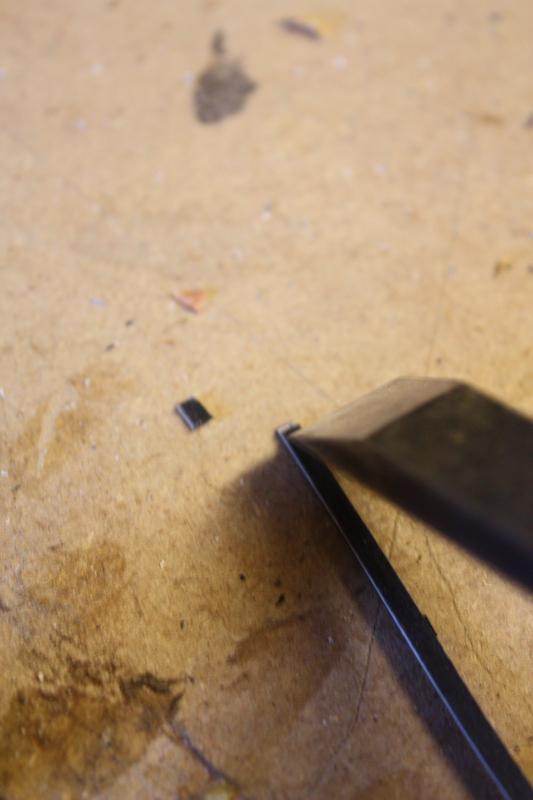
- an angle is cut onto the end of the strip to be fitted
-
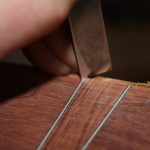
- A chisel cuts a mitre into the black white black binding strips

-
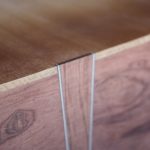
- The tail piece end graft was fitted last time

-
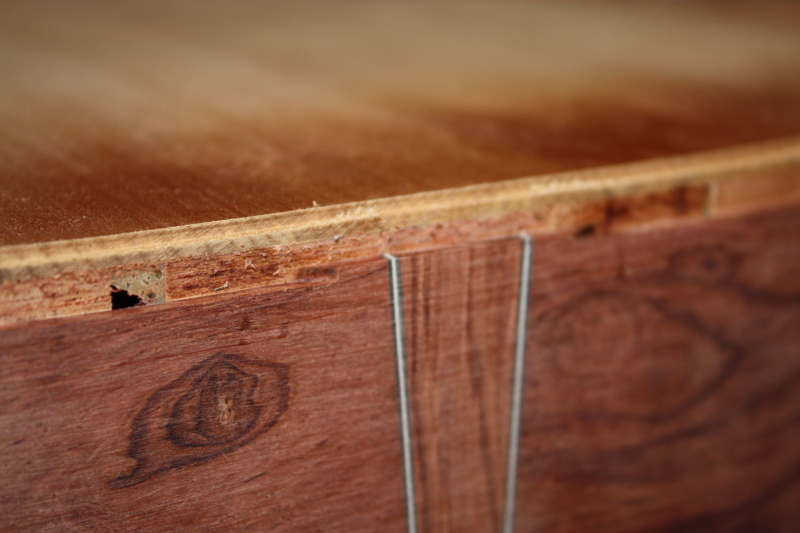
- The end graft sticks up slightly…
-
- An angle is cut onto the end of the strip to be fitted

-
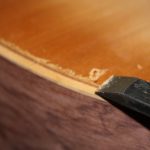
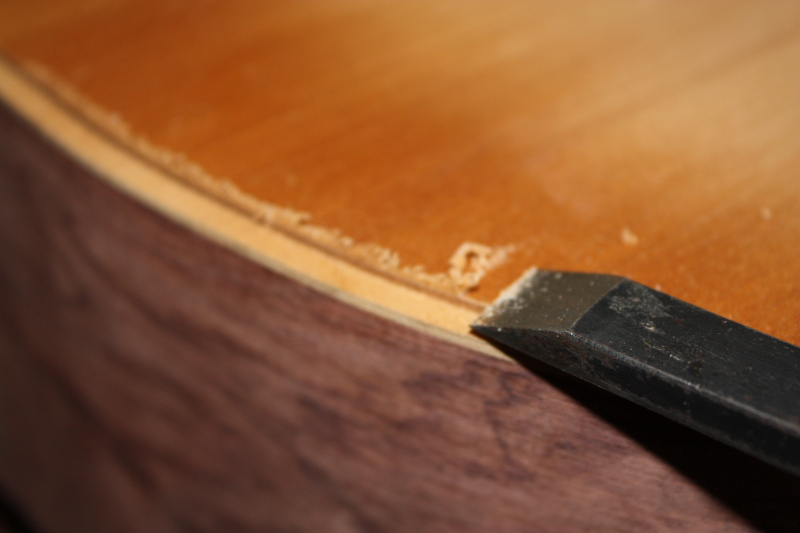
- The binding channel is cut, a chisel cleans up the furry edge
-
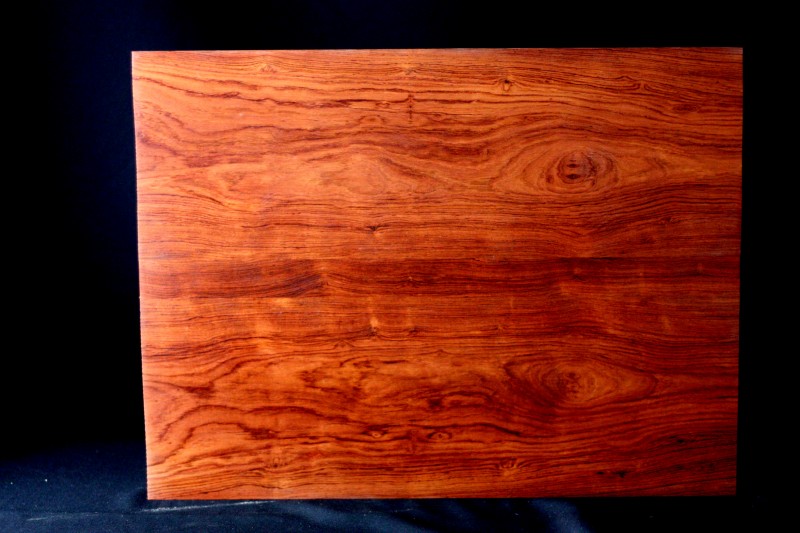
- Rosewood was used for the back and sides
-
- The Ancient Kauri soundboard
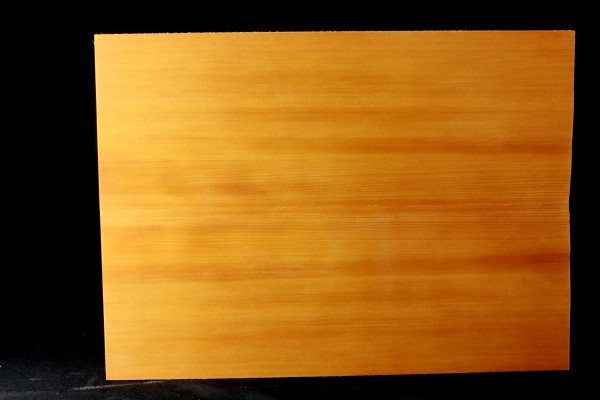
Sandy was kind enough to provide a link to this web page for more info about ancient Kauri. It is really amazing to be using the oldest workable wood in the world. To think that this tree was alive so long ago- before human civilisation really began…it is fascinating.
But I have always had a fascination with wood and would also like to think that I have a natural affinity for it which I try to apply to my instrument making. Making guitars by hand gives me time to get to know each piece individually and intimately as I am striving to get the very best out of every part of the instrument.
A Confession:
I always smell a piece of wood before I use it…I guess there is a word for people like me. (Yes I just googled….its xylophile: one who loves wood.)
When I was young I heard about old craftsman folk who can identify any wood species by smell alone…I wouldn’t say I was that good but I can certainly recognise a few and understand how it could be true as each species releases its own distinctive aroma while it is being worked. My all time favourite is antique Brazilian rosewood which is just gorgeous…like cherries and chocolate. Indian rosewood is similar but not as nice. Walnut and cedar are particularly distinctive.
The Ancient Kauri smells kind of like cedar to me but I must admit the first time I smelled it, I thought I caught faint whiff of abalone which also comes from New Zealand, so that would make sense. Is that what NZ smells like?
I should say here that sniffing wood is not good for you generally- some woods are carcinogenic (will give you cancer) and a dust mask should be worn at all times when working with any material that creates dust.
No harm in a quick sniff though….
As far as workability of the wood goes…no problems there. Works just as well as any other wood I would use for the soundboard.
It produces a strong powerful tap tone now the body is together…we’ll have to wait and see what it sounds like with the strings on…

Highland Hot Club visit to check progress on The Spaceship
Steve wants his guitar to light up like a 50’s UFO!
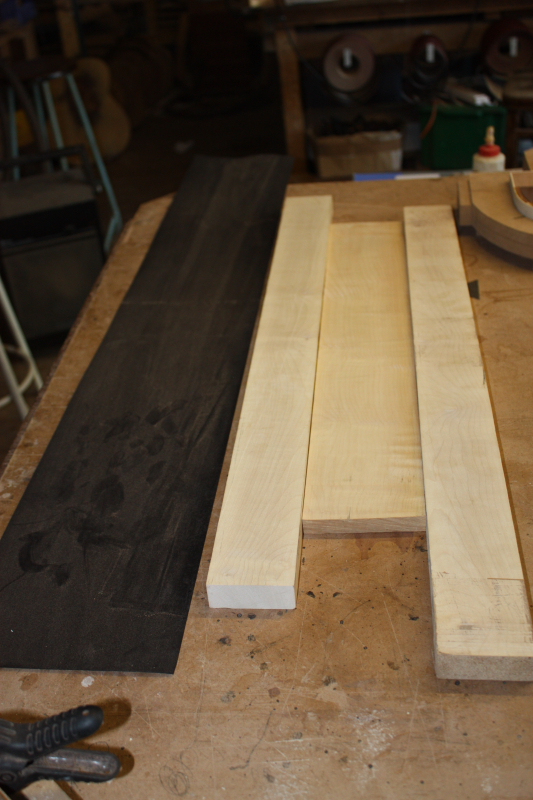
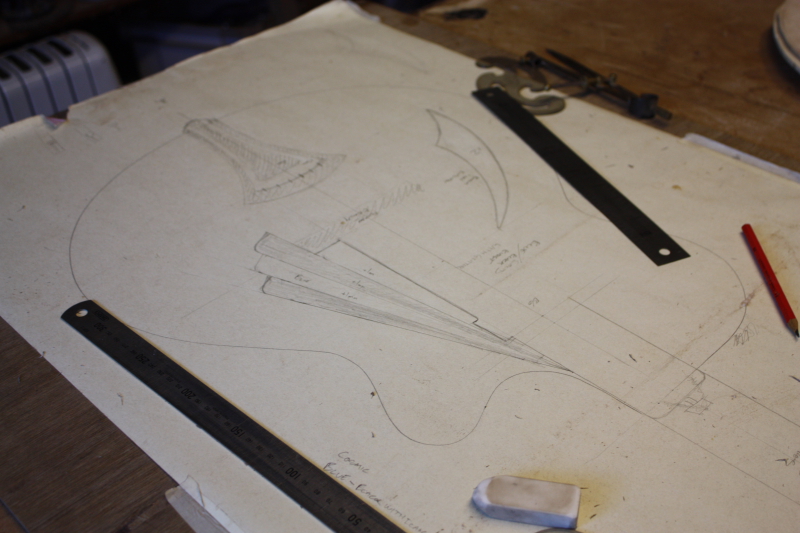
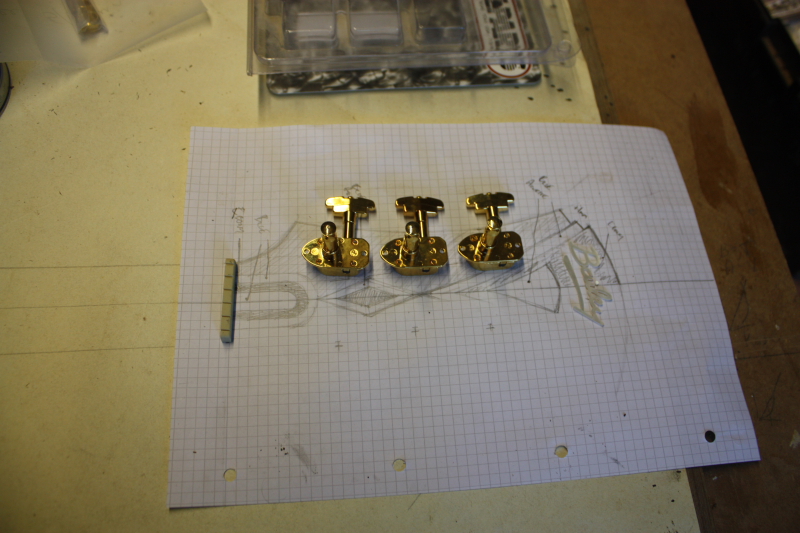
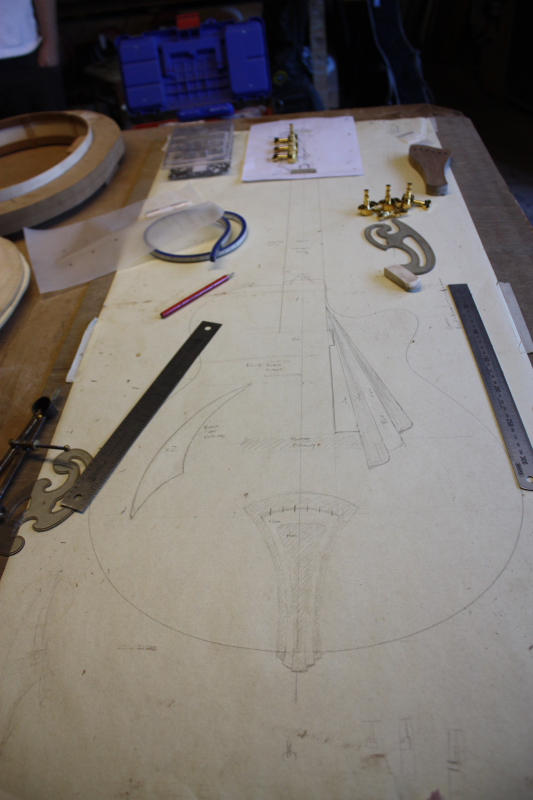
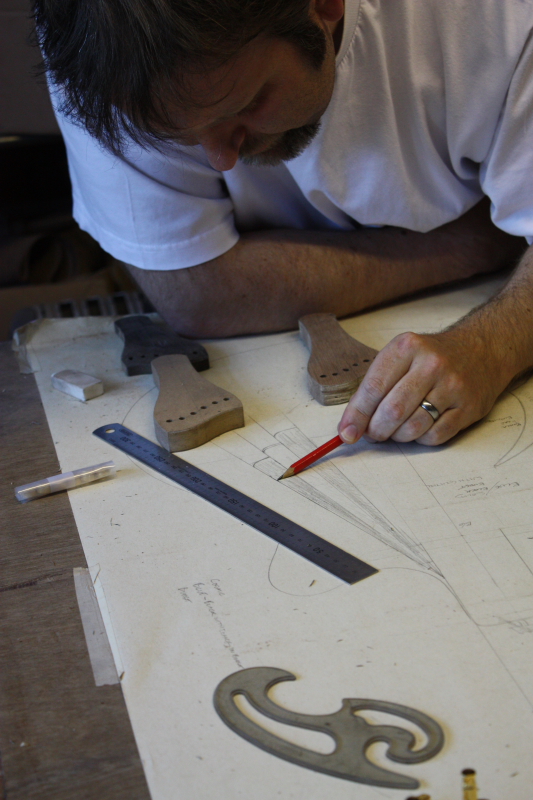
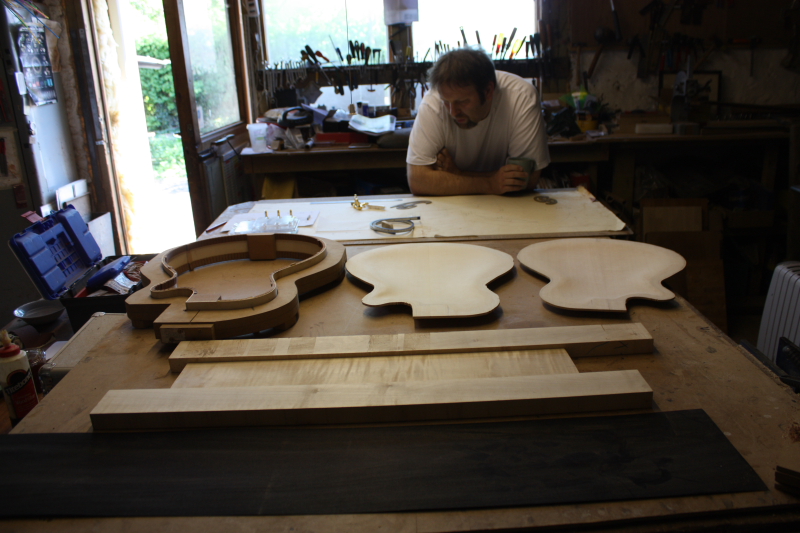
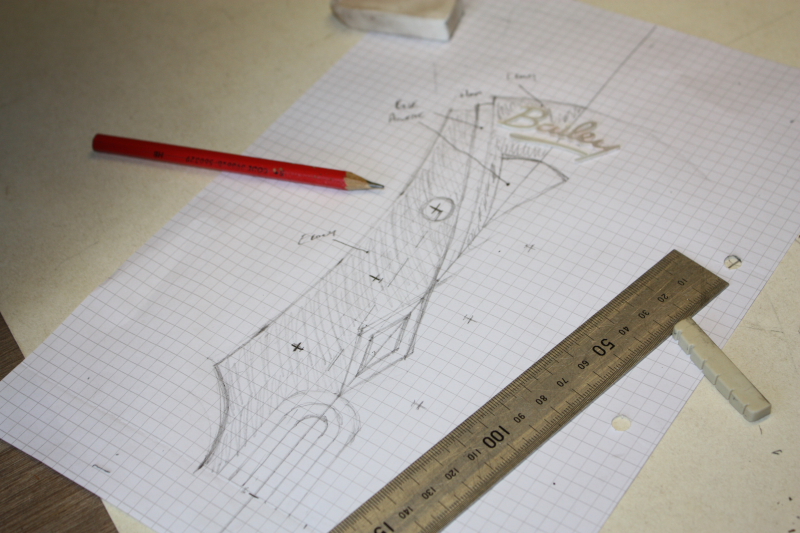
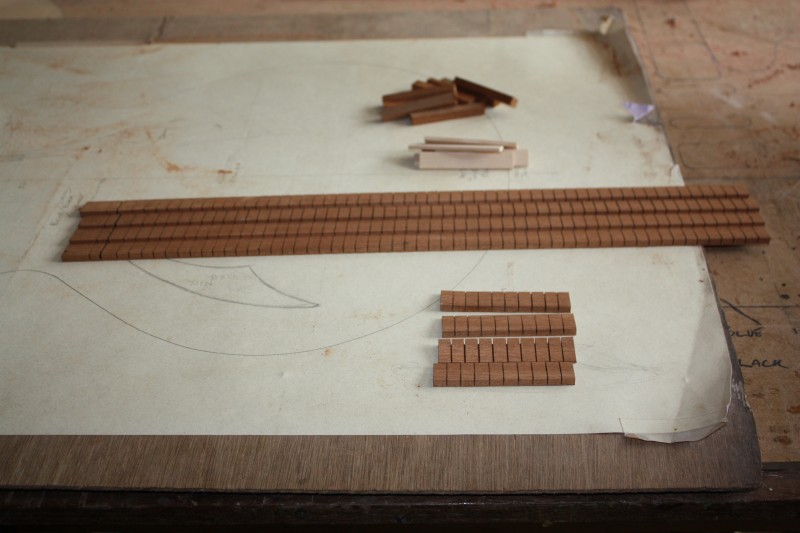
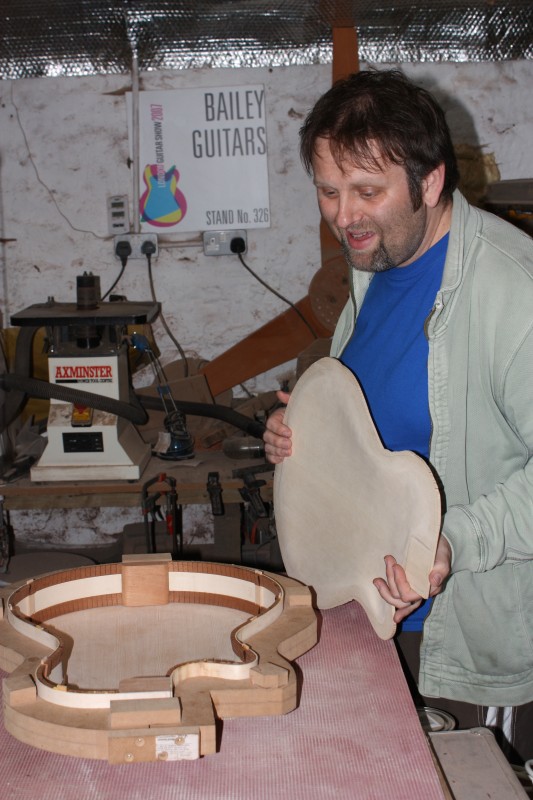
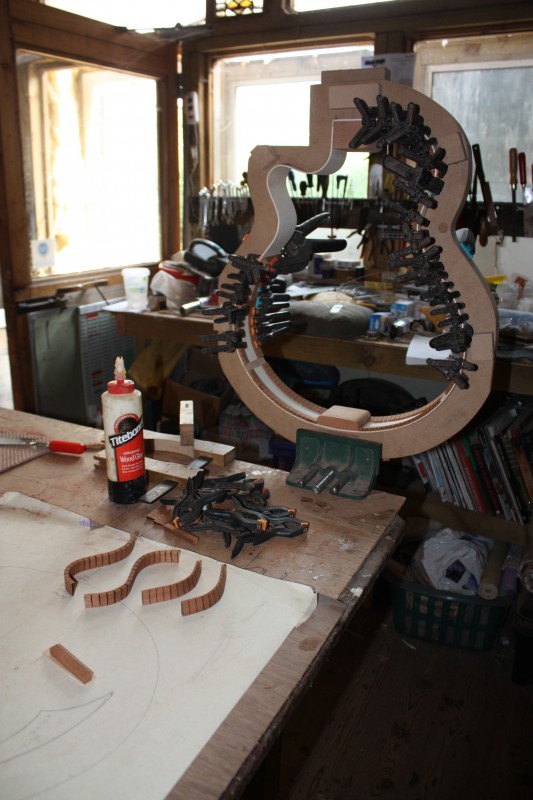
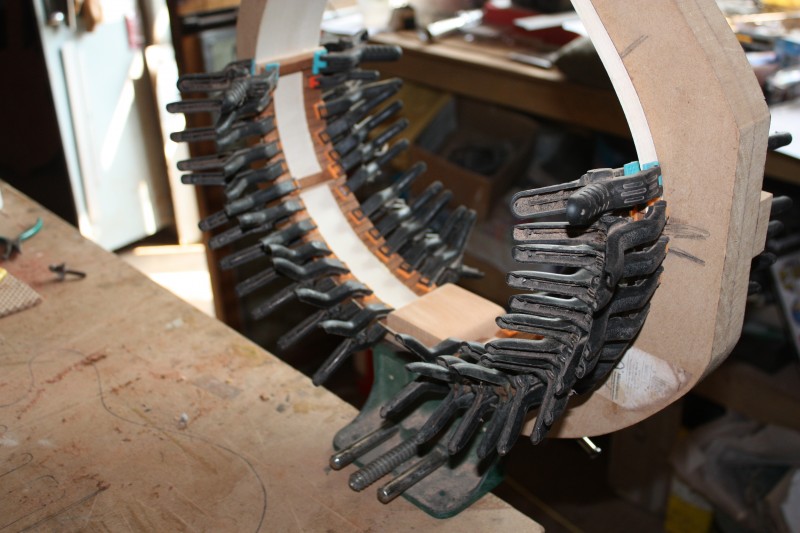
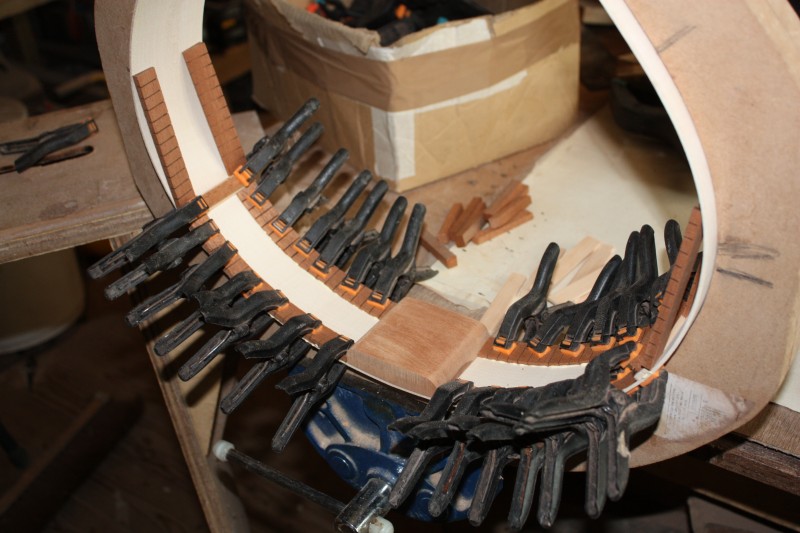
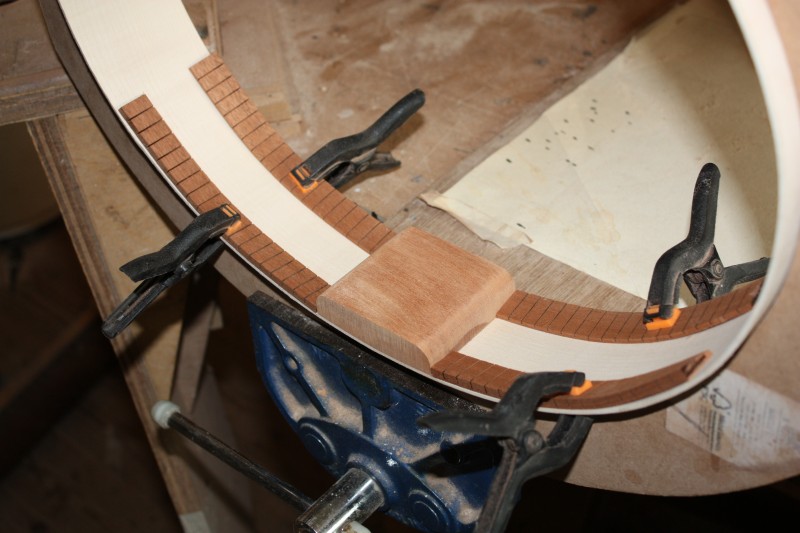
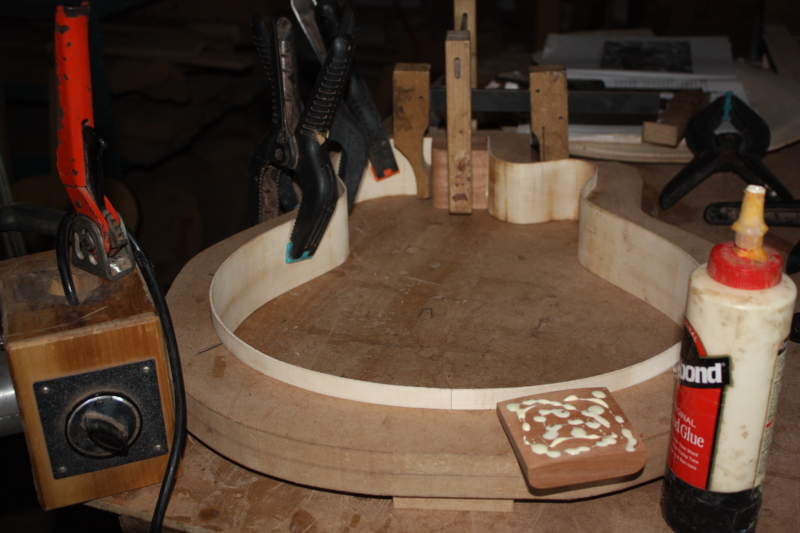
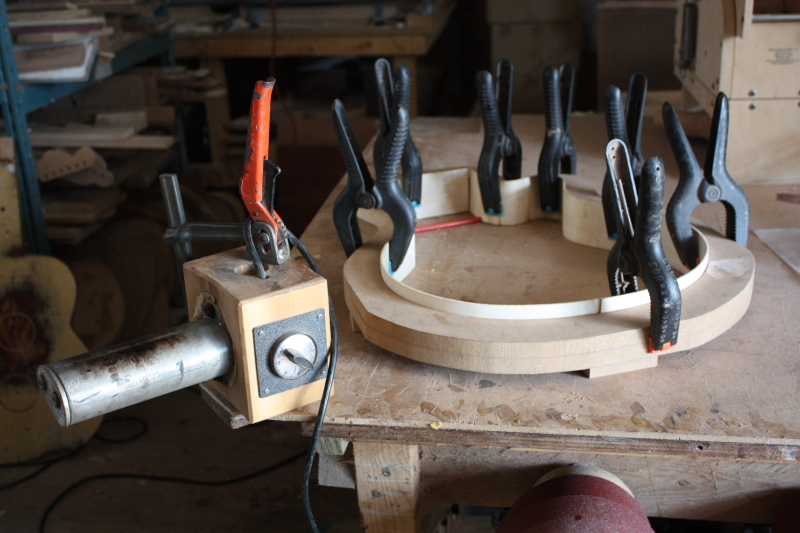
Steve and Evelyn from the Highland Hot Club came down from Inverness at the weekend for a blistering series of gigs and dropped by to see how the Spaceship was getting on. Me and Steve spent the Sunday afternoon in the workshop where we did a bit of work on the drawing to fill in a few of the missing details like the finger-rest, tail-piece and headstock. The black parts of the art deco style designs will be ebony and the rest blue azurite which should look amazing.
During the conversation he casually murmured something about blue LED’s inside the guitar. He has a microphone which lights up blue, so he wants the guitar to match! Shouldn’t be a problem but I’ll have to look into that…I know blue LED’s have been hard to get in the past but I checked and they seem to be readily available nowadays. I will probably mount the watch batteries and a on/off micro-switch for this under the finger-rest. Not sure how I’ll mount the LED’s inside but I’ll work something out…
While he was here Steve showed me some of the three note chords he uses in the ‘Hot Club’ style…I learned that Am6 is also D7, D9 and F#dim and Adim and Cdim…Amazing… 6 chords in three notes…Now I am really confused!